Alaska is cool. Except when it’s cold, frigid, or during our visit to Denali National Park where it was hot enough to feel the permafrost melting. Low 80’s didn’t seem hot to folks from Phoenix, where it was then 120, but that’s about as warm as it gets. Climate change and melting permafrost have had a huge impact on Denali National Park. With a goal of preserving as much wilderness as possible much of the park has no infrastructure- no trails, roads and no use of mechanized equipment. The park’s sole road traverses 92 miles of the park’s 7,480 square miles and private vehicles are permitted on only the first 14 miles. Shuttles, tour and transit vehicles are the only mechanized means to travel the rest. Over the years as the permafrost melted, a section of the road that was built over a rock glacier began to crack, first an inch or two a year, escalating to several feet a day, eventually sliding over 70 feet necessitating the closure of the park road at mile 43 until at least 2026 when a bridge over the gap is scheduled to be completed.

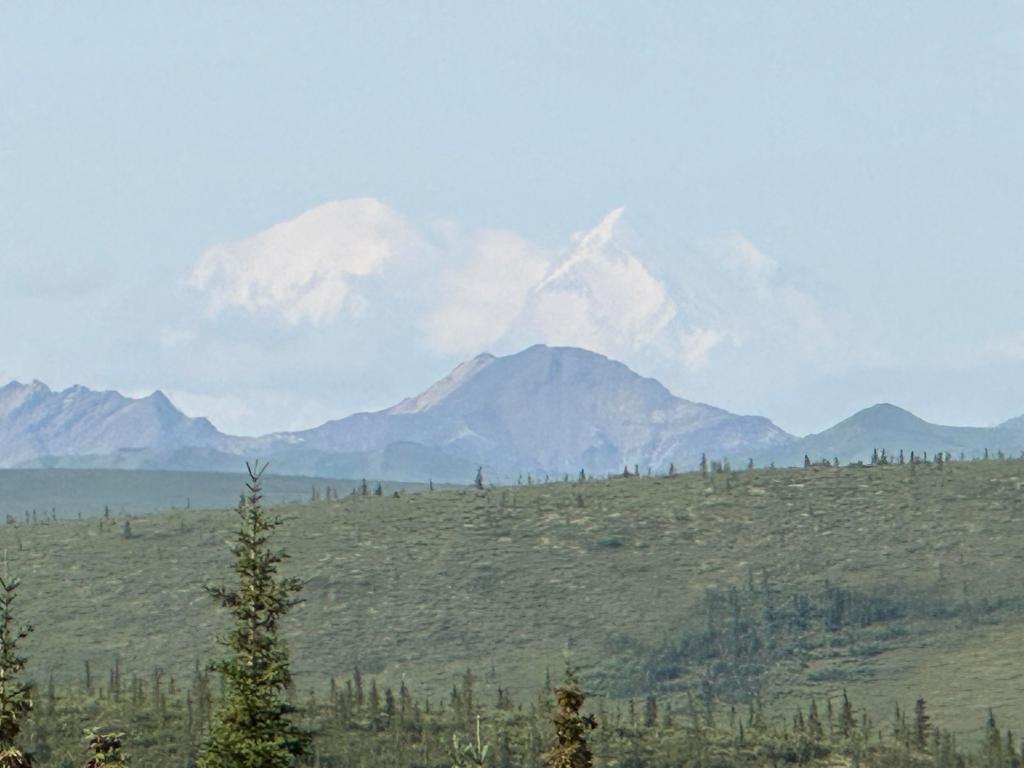
Despite the inability to access some of the Park’s most famous spots including famous postcard views of North American’s highest mountain, there is still a lot to see and do. But since the mountain hides in the clouds an average of 2 days out of three, many visitors never see it at all. Despite the obvious presence of “The Great One”, the mountain that bears its name, the park was originally formed to protect the Dall sheep that roam its mountains. Originally named Mount McKinley National Park in 2017, it was renamed to Denali a century later to preserve its name in the native language. 60% or so of the park’s 600,000 annual visitors (the pre-pandemic number) arrive by train or bus as part of a cruise company tour. This helps keep the number of passenger vehicles down. But whether you find your way there by that or some other means, here is some advice to make the most of your visit.
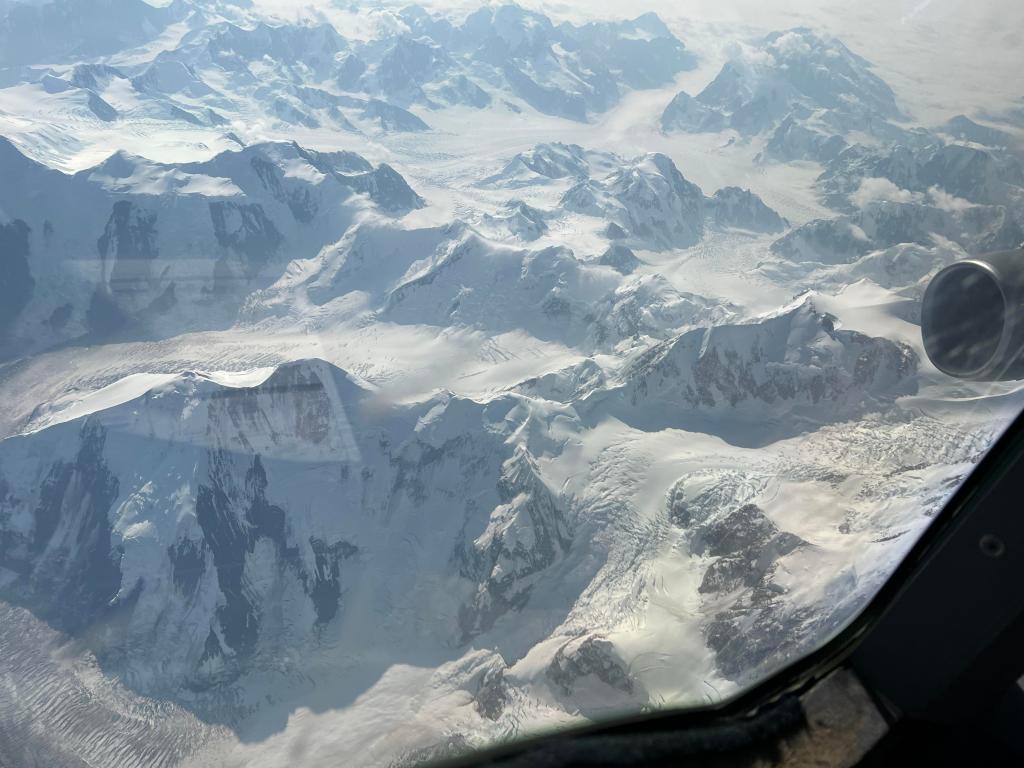
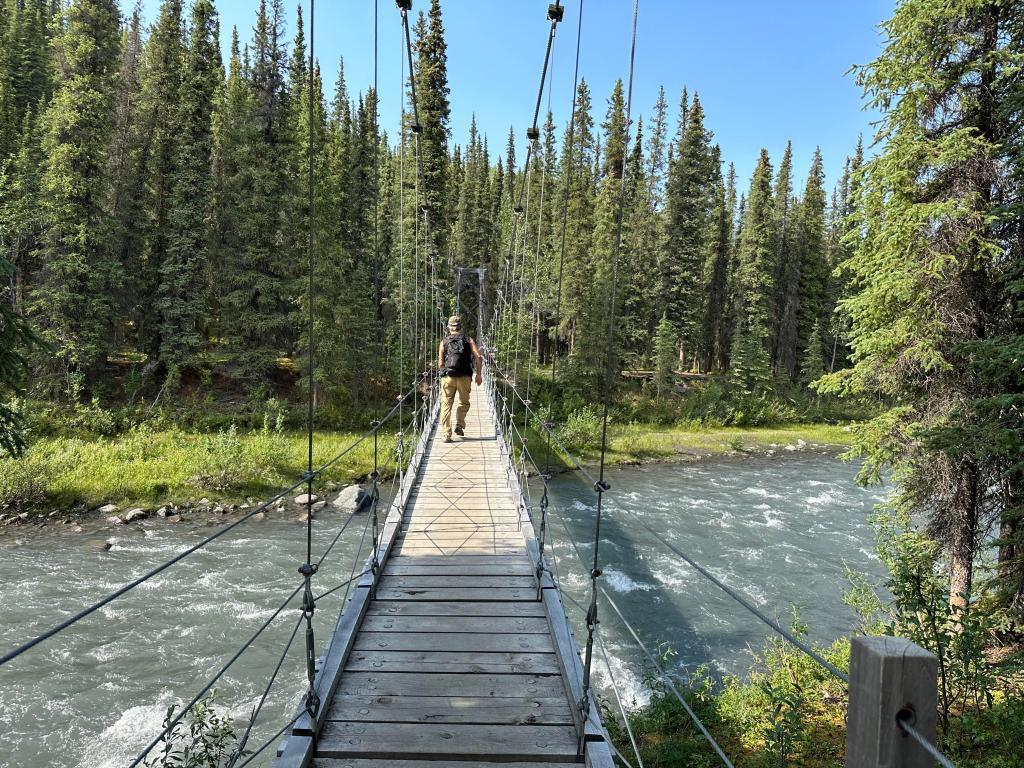
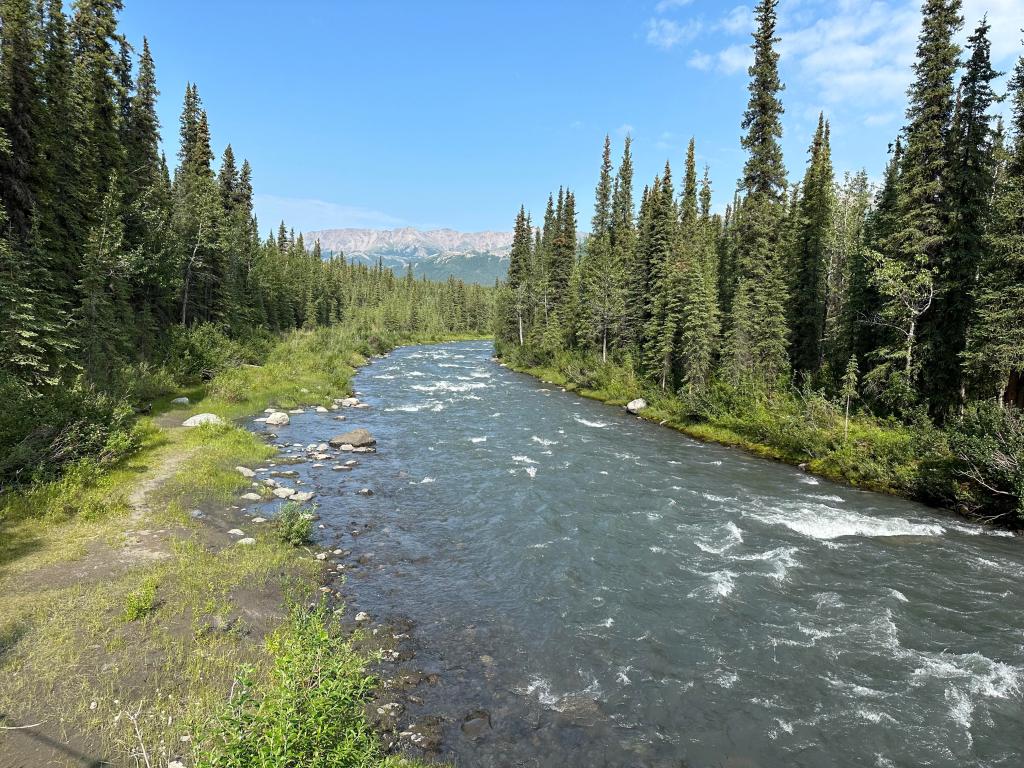
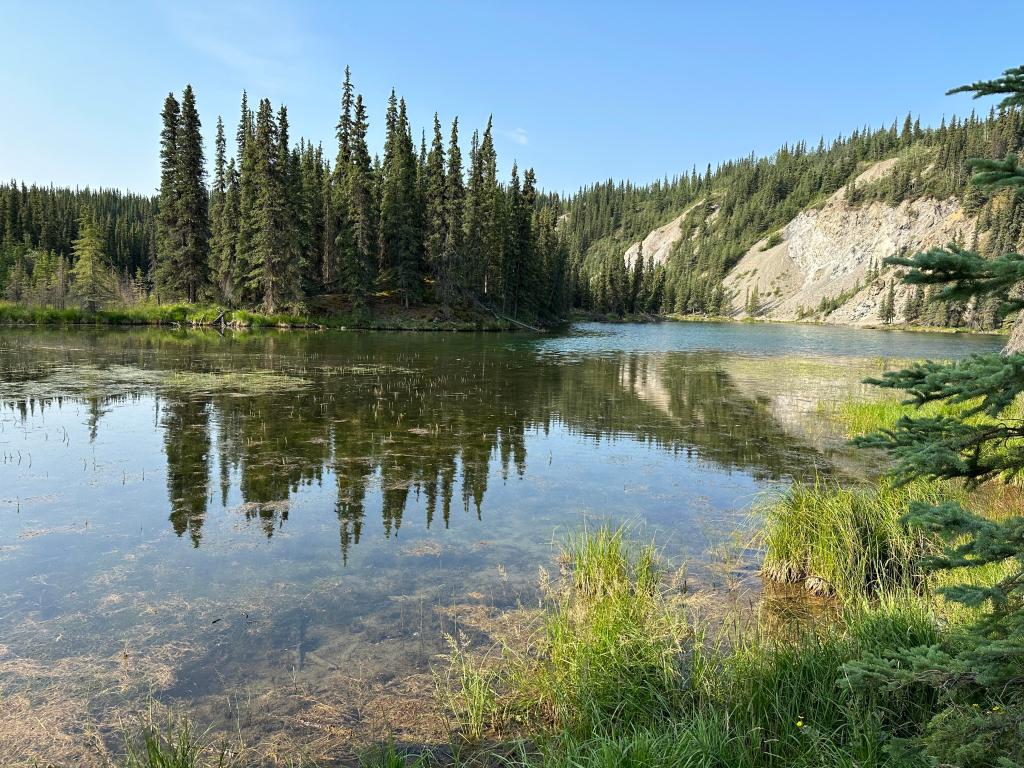
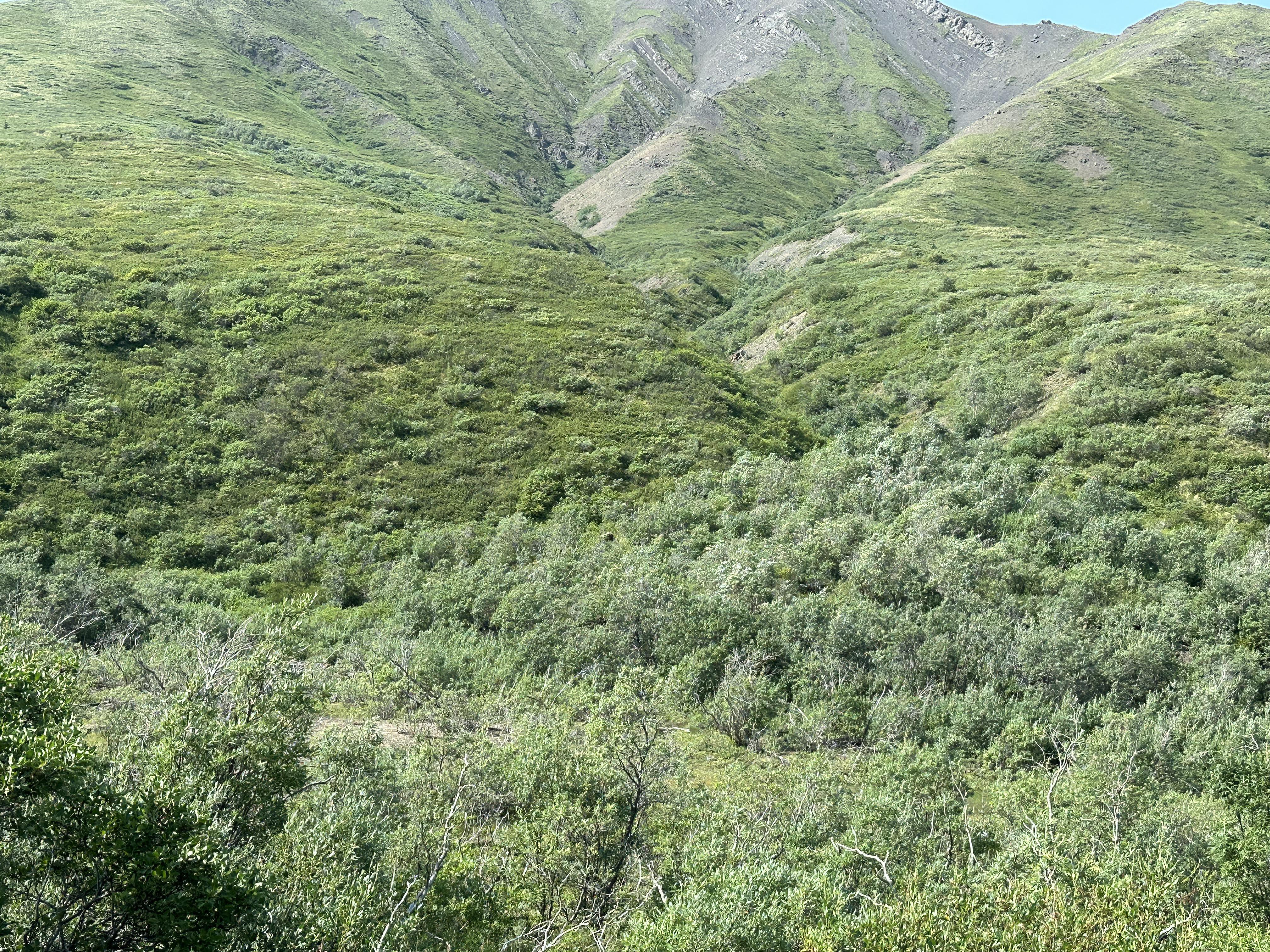
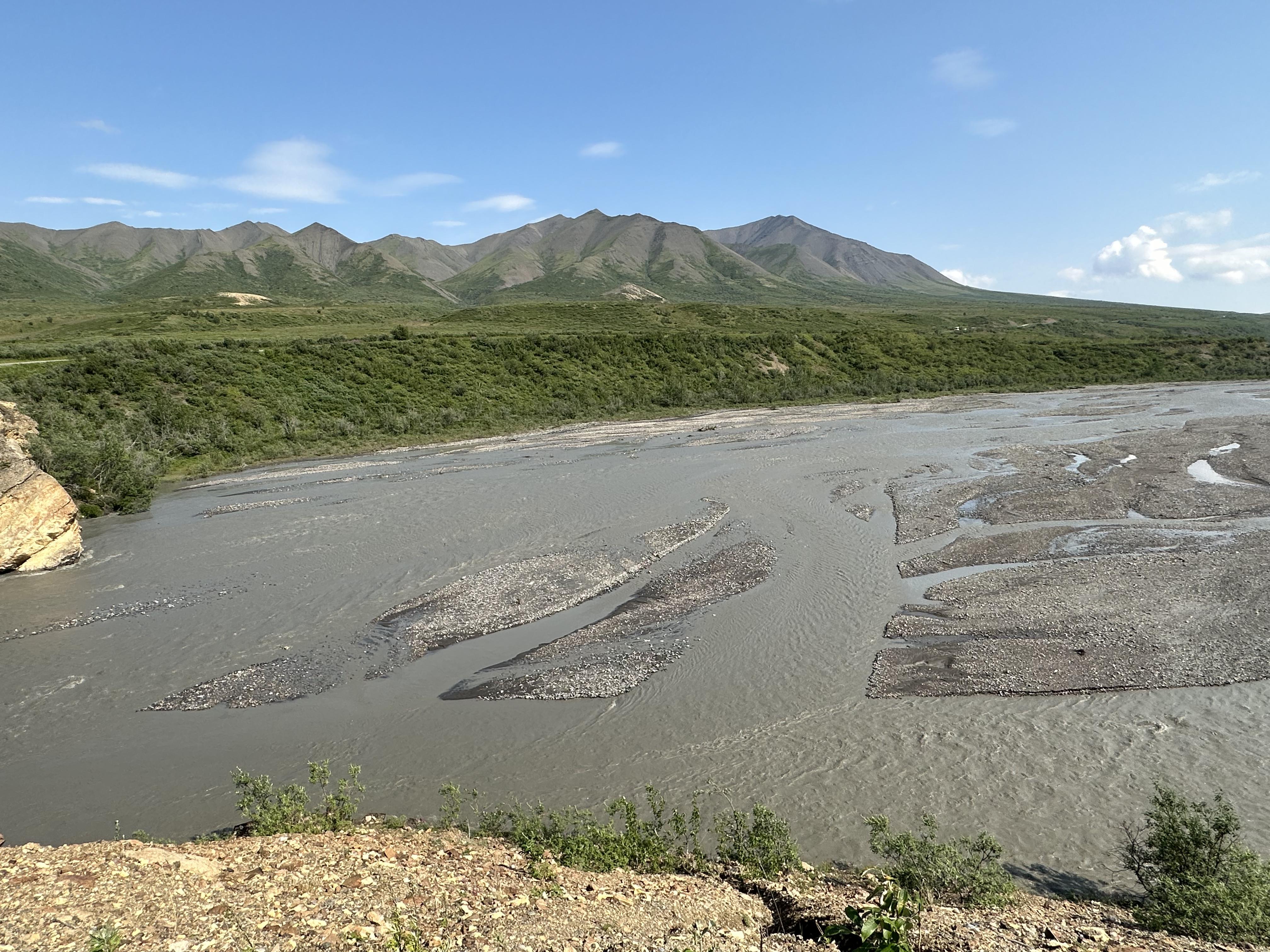
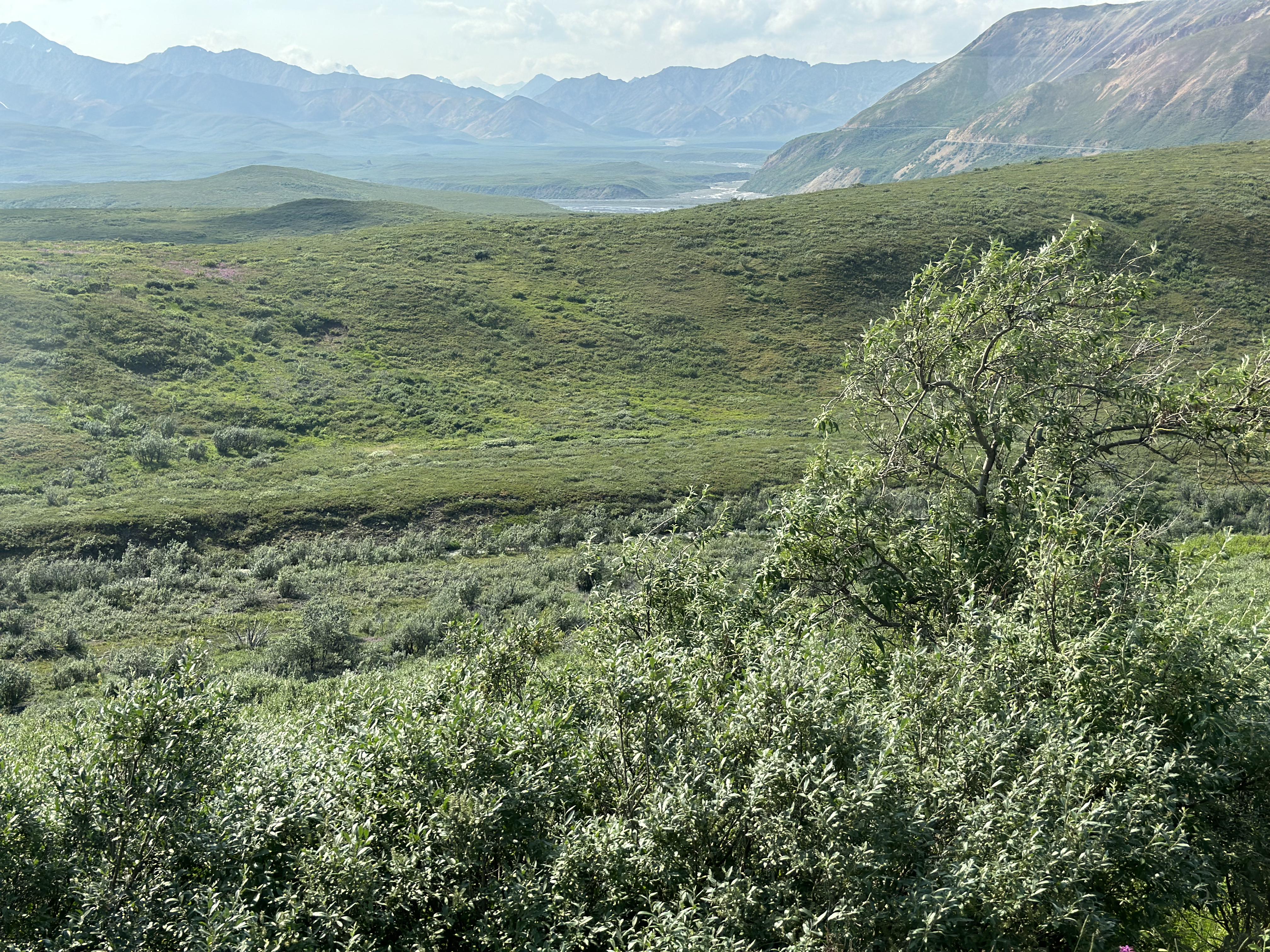
From top left: Dall sheep are here somewhere or maybe a grizzly?, Teklanika River, Caribou behind bush (really).
- Get off the asphalt. Hike one of the many trails. There is something for every level, the visitor center has lots of information and rangers are available to answer questions and provide advice. We happened to be in the visitor center when they announced a ranger led hike leaving in a few minutes. We went along and learned a lot about the park, the vegetation, safety precautions ( including how to use bear spray- yes you should carry it) and other interesting tidbits. Moose are more dangerous than bear, but they are easier to deter (hide behind a tree, note that is not an effective strategy with a bear). You do one thing if encountering a black bear and another if it’s brown (play dead vs look big and threatening). I do not remember which is which, making any potential confrontation problematic. Excuse me Mr./Ms. Bear, are you brown or black? Where is my cheat sheet with instructions? And my reading glasses… We went on several hikes on our own encountering no wildlife larger than a squirrel.
2. Go as far into the park as you can. The terrain changes dramatically- the visitor center area is forest, 20 miles further in you are in open tundra. That’s also where you will see wildlife: we saw dall sheep (at least they said that is what the white dots on a ridge were), a caribou and a grizzly bear- all from the safety of a bus. Also keep in mind that you must go at least 9 miles down the park road until Denali is visible, which as discussed earlier is not a sure thing.
- There are several different modes of transportation in the park. Free shuttle buses that go to mile 14, tour busses and transit busses. We took the non-narrated transit bus which went as far as the road was open. It is the less expensive option ($33 vs $141) which also allows you to get off and then pick up another bus later. Despite being labelled “non-narrative” our bus driver Tom (who is also a naturalist) gave a lot of information during the trip, pointed out wildlife and stopped so we could watch the action. Well worth the time and money.
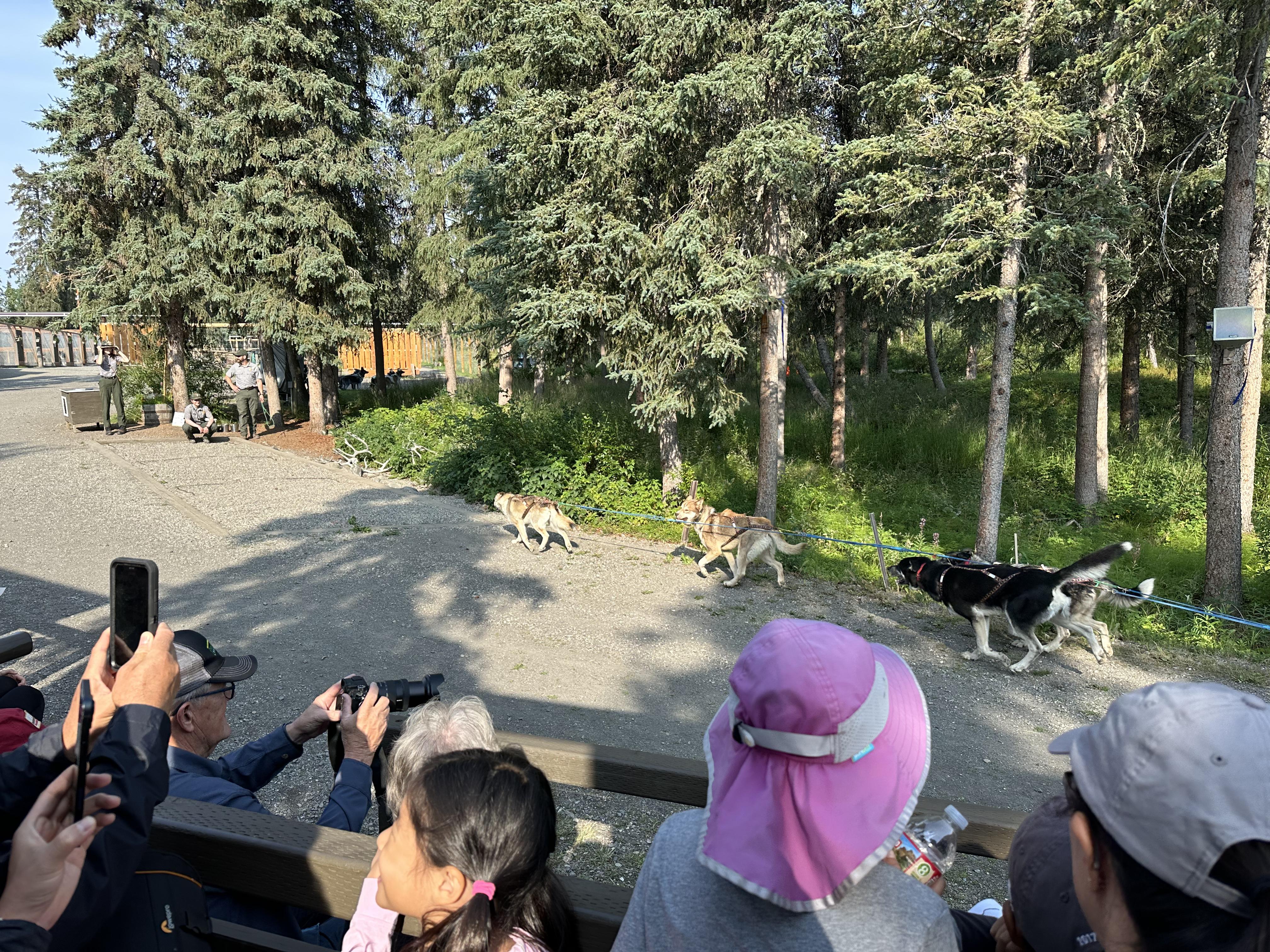
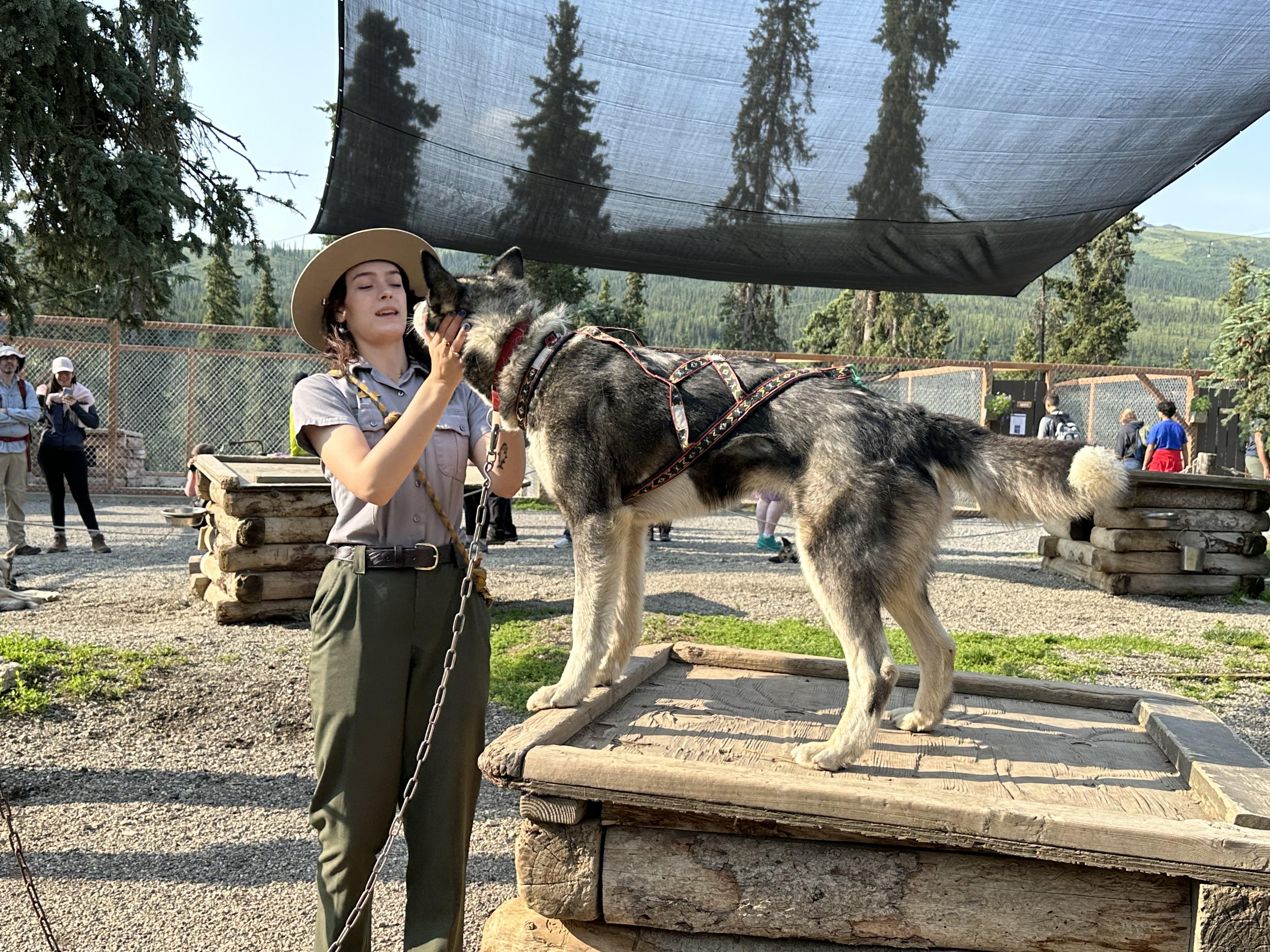
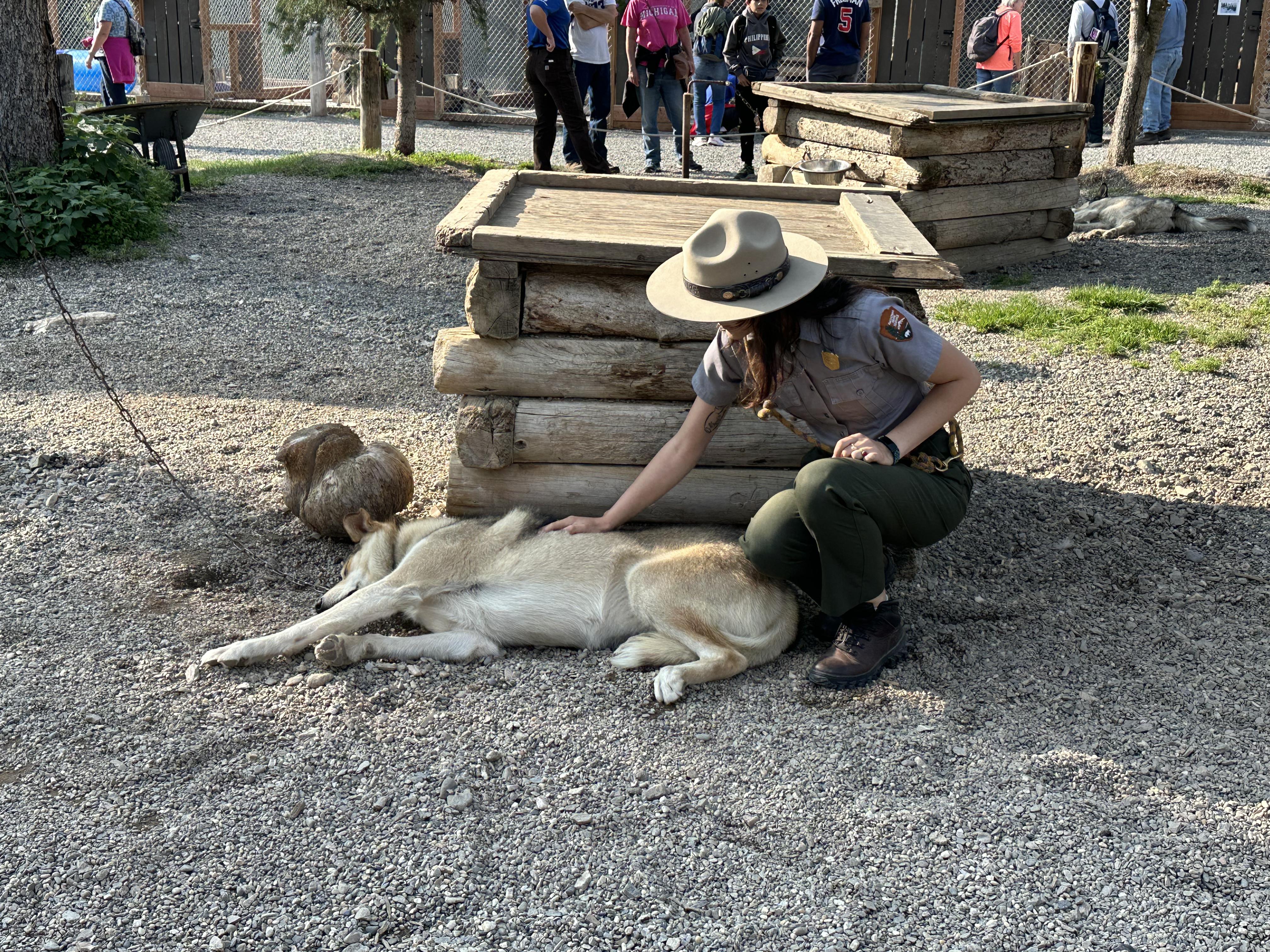
3. Go see the sled dogs. This is the only national park to have a sled dog kennel,This summer you can visit the kennel between 9:30 and 4:30, but try to attend one of the 30 minute demos offered 3 times a day. The dogs have played an important role in park operations from its beginning. originally the dogs patrolled the park to prevent poaching. Today they fill different roles, especially in preserving the park’s 2 million acres of wilderness which no motorized vehicles or equipment are permitted. And while slower than snow machines (in Alaska do not call them ski-doos or snow mobiles) the dog sled teams are more reliable. Try starting an engine at 40 below, not happenning; after a hearty breakfast the dogs are good to go! Their keen senses and expereince in this harsh environment will also sense dangers that humans would miss. Plus they are cute.
Alaska is big. Obvious, but let me explain why I point that out. You are looking at a travel guide or a cruise itinerary thinking abut all the awesome things you could see and do on your trip. If, like more than half of Alaska’s visitors, you will be going on an Alaska cruise you will see part of the state’s southern coastline- mountains, glaciers, some classic cruise stops like Skagway and Ketchican. We have done it and it’s a great experience, but you will see only a miniscule part of this massive and diverse state. Consider adding time to explore before or after your time afloat, cruise companies offer options, but you can do the same things on your own.
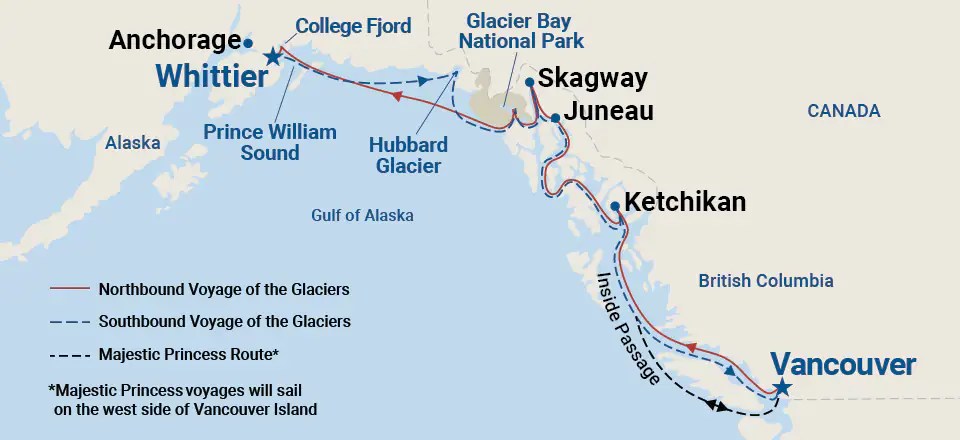
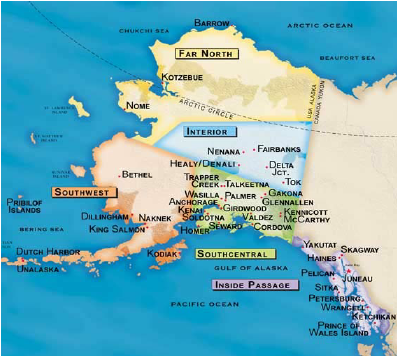
There are a lot of options, to add onto a cruise, too many to fit into a typical american vacation, especially considering the travel realities of such a huge and diverse geography. Too many even if a boat is not part of your plan. It is tempting to try and fit as many top attractions as possible into a trip. Halibut fishing from Seward, dash up to catch a look at Denali, visit Dutch Harbor (for fan’s of The Deadliest Catch) step on one of the state’s 100,000 glaciers- check, check, check. It is theoretically possible. Friends who had lived in Alaska provided good advice- pick something you really want to do, or an area you want to explore. Focus on those experiences rather than rushing between drop bys.
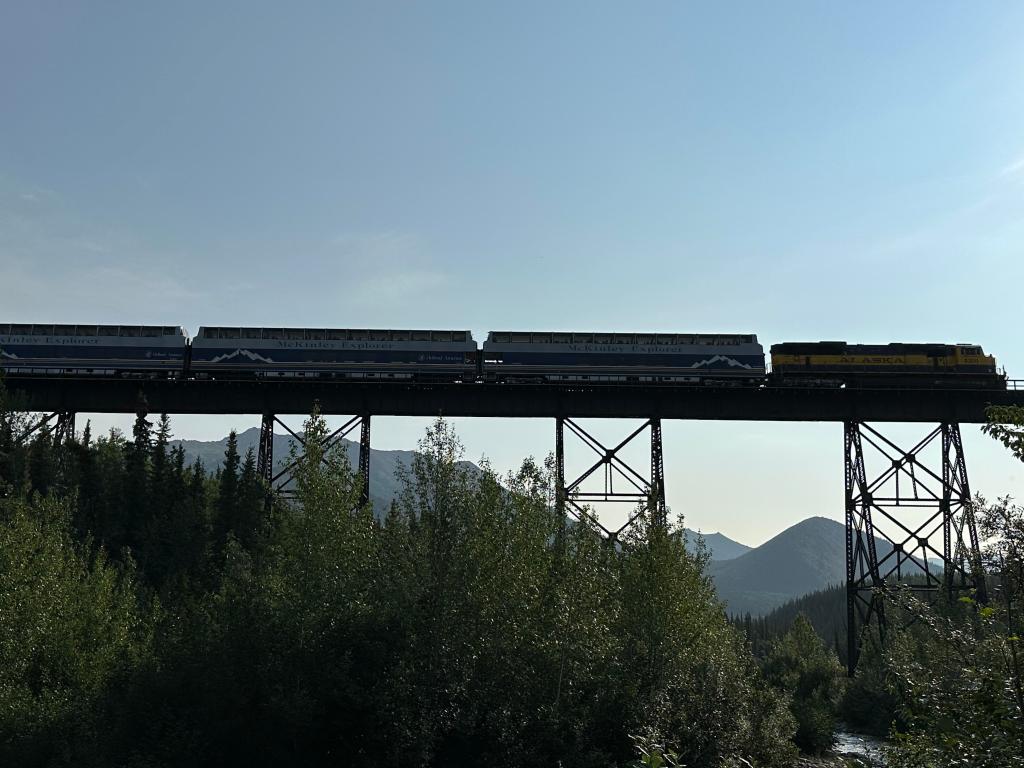
Where to stay while visiting Denali? The only in park accomdations are campgrounds. The Denali Chamber of Commerce provides useful information. Businesses mainly list their location by their milemarker on the Parks Highway. The road into the park is at Mile 237, so pay careful attention! Expedia works too. We stayed at the huge Denali Princess Wilderness Lodge at mile 238. While most guests are there as part of a Princess Cruise Tour, their rooms are nice and at the time we were there, reasonably priced. Since we assumed most of the Cruise Tour folks would eat at one of the restaurants on property, we went off.
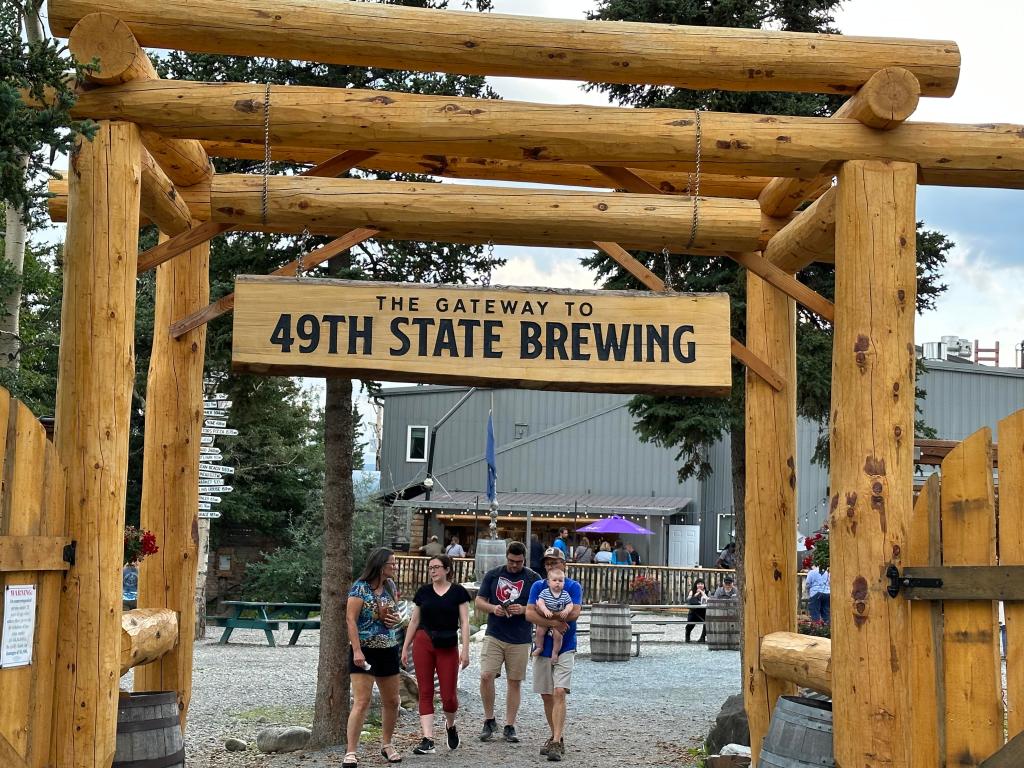
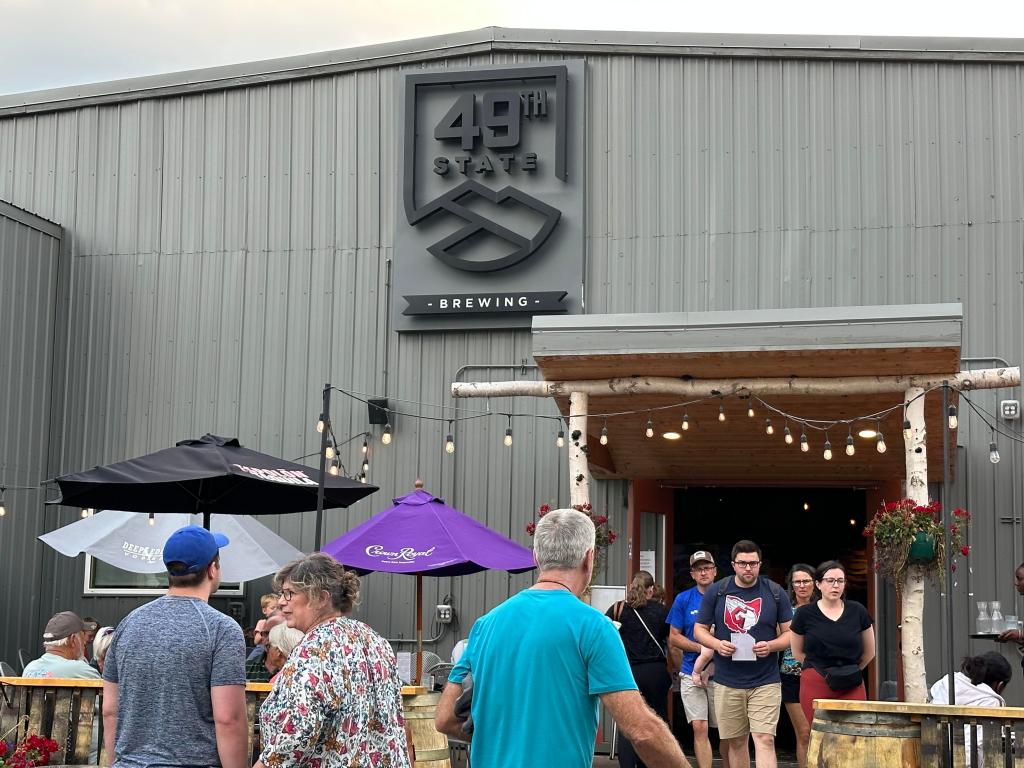
One night we went to 49th State Brewing, 11 miles up the road in Healy. In high season be prepared for a wait (for us 45 minutes), but you can hang out in the courtyard with one of their beverages and a variety of yar Food was good, Alaska focused ingredients- fresh Halibut, salmon and of course their world famous Yak Burger. That’s what the menu said, Rob had it, it was fine.
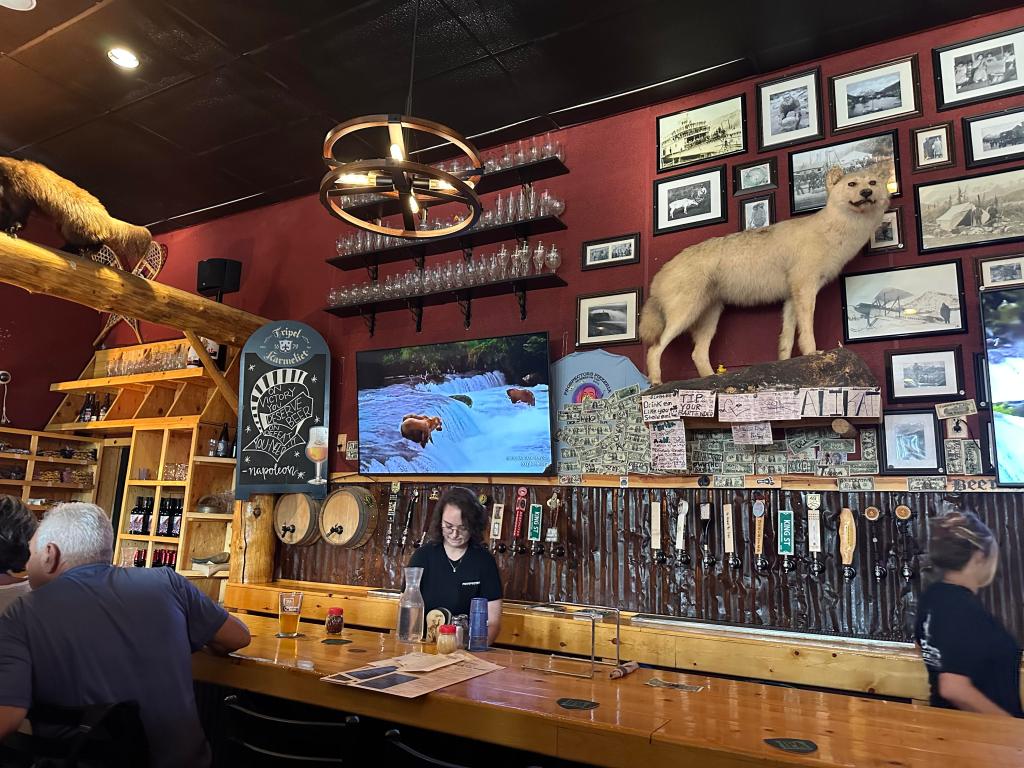
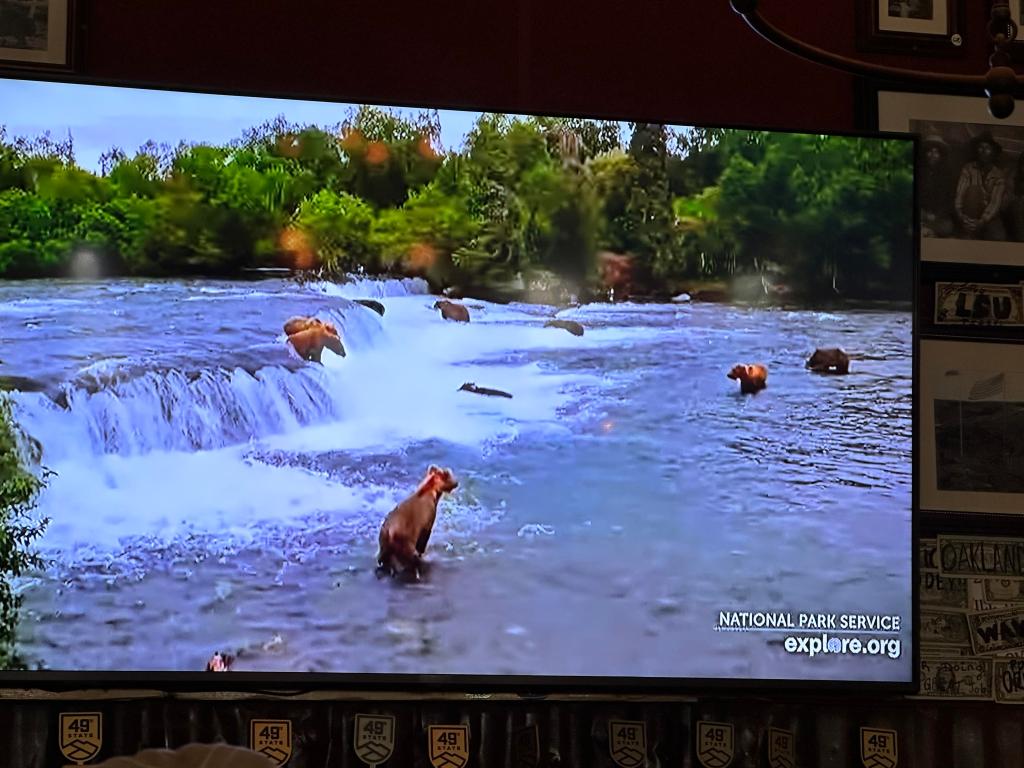
The next night we went to Prospectors Pizza where you can get your pizza with elk meatballs or Alsaka King Crab, or not. The big Tv’s in the bar were tuned to sport fishing, a live feed from another Alaska National Park of bear fishing for salmon.
Denali is worth a visit. But Alaska has so much to offer. Next time Explorer Barb will tell you more. Stay tuned!
 Explorer Barb