When asked to name the highlight of the trip to Antarctica, one of the most common answers among fellow travelers is South Georgia Island. Interesting you say, considering that this 102 by 22-mile island lies over 1,700 miles from Antarctica. One of the remotest places on earth, with harsh weather and challenging mountainous terrain, half permanently covered with snow and ice, it is home to only 30 residents, most of whom are scientific researchers. However, this overseas territory of Great Britain hosts some of the world’s most exquisite wildlife: five million seals of four different species, and 65 million breeding birds representing 30 different species. 3 million Macaroni Penguins, 1 million king penguins, a hundred thousand gentoos and some assorted chinstraps, Adelies and rockhoppers. A big difference from the northern polar regions which are fairly barren. On our Greenland trip we saw a few arctic hare, some musk ox and one polar bear. Why are these colder and icier waters of the Southern Ocean so rich in wildlife? Krill. It’s all about the food. Krill and the phytoplankton on which they feed is the backbone of a short food chain. Penguins, seals, whales and birds either eat krill or something that does.
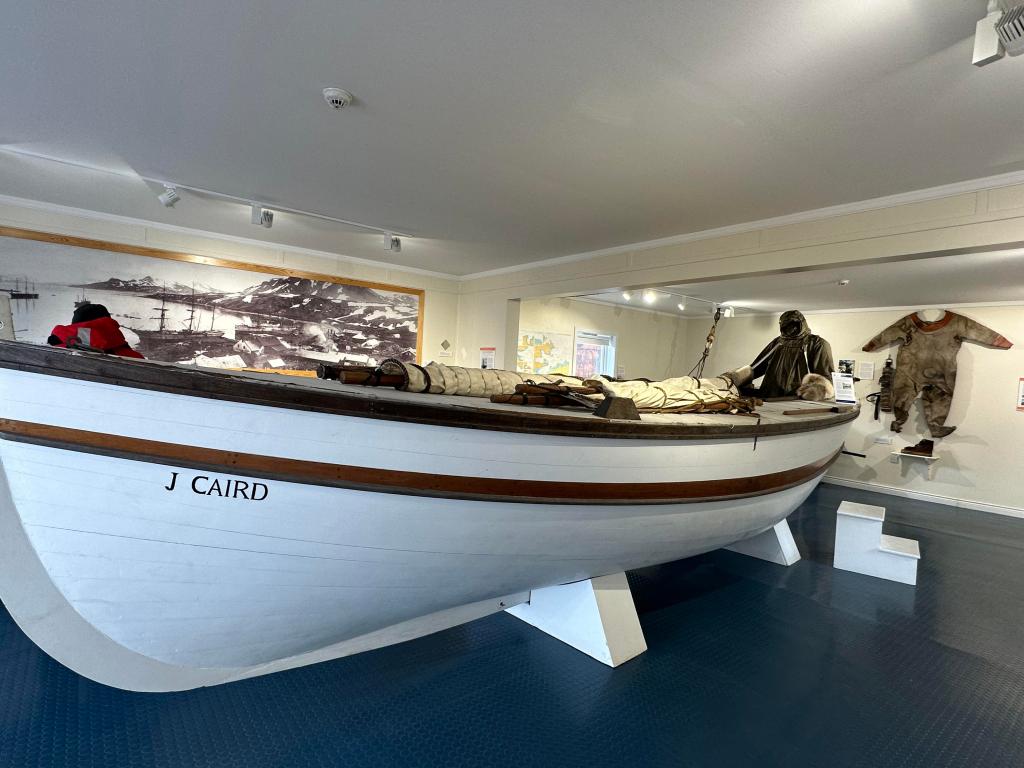
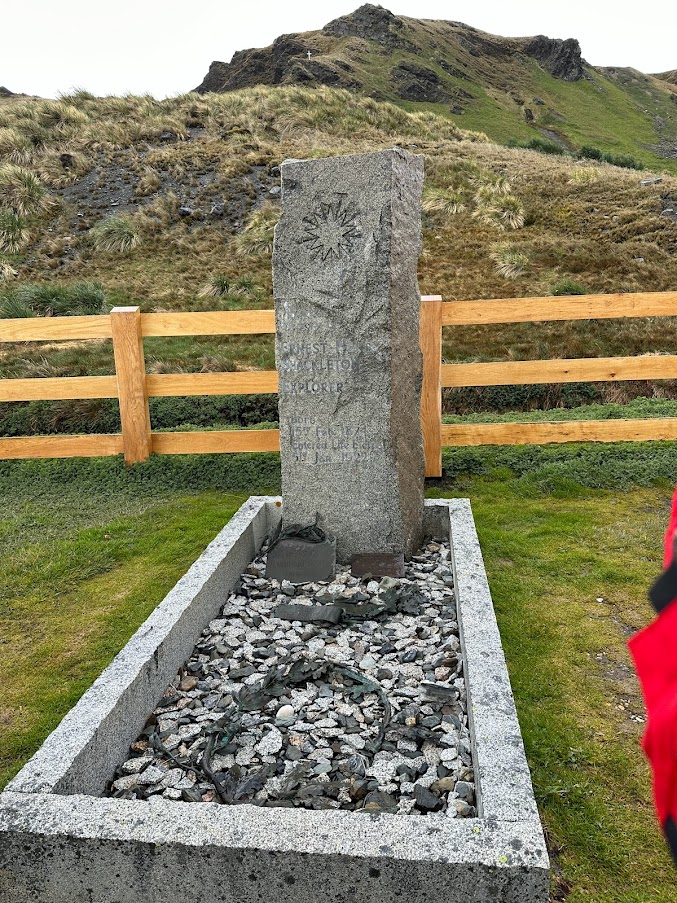
In addition to spectacular scenery and an overwhelming display of wildlife, South Georgia is rich in history. First claimed for Britain by Captain James Cook in 1775 it became a base for hunters of fur seals, then whalers until the end of commercial whaling era in the mid 1960’s. The island figures prominently in the era of Antarctic exploration and is the final resting place for one of the most famous, Sir Ernest Shackleton. If you have not read Endurance, Alfred Lansing’s story of this incredible voyage, it is worth a read or re-read. An amazing tale of well, endurance, as well as of leadership but I’ll jump to the end. In a last ditch effort to get help for his crew stranded on Elephant Island, he and five companions took off in a 22 foot lifeboat, the James Caird for the 800 mile journey to South Georgia Island. It is miraculous that they even found this tiny island, much less survived the 17-day sail in a leaky boat through some of the roughest seas in the world. The replica displayed in the museum in Grytviken makes plain how astonishing this feat was. Then when they found it, the wind and currents prevented them from getting to the whaling stations on the north side of the island, forcing them to land on the rocky southern coast. In another seemingly impossible feat, the three healthiest of the party, Shackleton and two others did something else no one had done before- cross the steep, icy center of South Georgia Island on foot with no climbing equipment, where finally the sound of a steam whistle guided them to Stromness Whaling Station.
After leaving the Falklands we had two sea days to prepare for our visit to South Georgia. Mandatory bio security training and gear inspection involved learning about threats to the pristine environment from nonnative invasive species. Invasive plants have overtaken some species that provide food and nesting places. Rats and mice that stowed away on ships had proliferated on the island decimating the seabird population. An intensive program eradicated the rodents helping rebuild the population. We vacuumed all our gear (amazing what sticks in Velcro) which was inspected by the naturalist team and then again by government officials upon landing in South Georgia.

We also learned about the wildlife we would see and what they would be doing. Depending on when you go you will see different animals and observing different behaviors. It’s all about, as described by the delightfully funny naturalist Petra, “Sex on the Beach.” Are the giant beachmaster elephant seals working on attracting a harem, or are they exhausted from all that, ah, activity? Are the penguins building nests, sitting on eggs, feeding new chicks? Most animal behavior can be explained by breeding and feeding. I could comment, but I will let you think about that, maybe over lunch…. We also were warned to be careful both on shore and around the ship. Once leaving the Falkland islands there are no hospitals, no air strips. The ship has a doctor and nurse along with a medical unit equipped for basic stuff- if you need a few stitches, or trip and break your wrist, they can fix you up. But if someone gets hurt badly enough that they require care beyond those capabilities we all go back. So please don’t do stupid stuff. Okay then. The Viking Polaris incident was still in the future but provides an example of what can happen. One hand for you, one for the ship. In other words have one hand for the handrail at all times. It’s very sweet of you to bring coffee for your spouse, but if the ship rocks and you fall down the stairs because you aren’t holding the handrail and we all must go back to Ushuaia because you have a compound fracture, you will not be very popular. That got the point across, and yes, the ship can rock and roll that much.
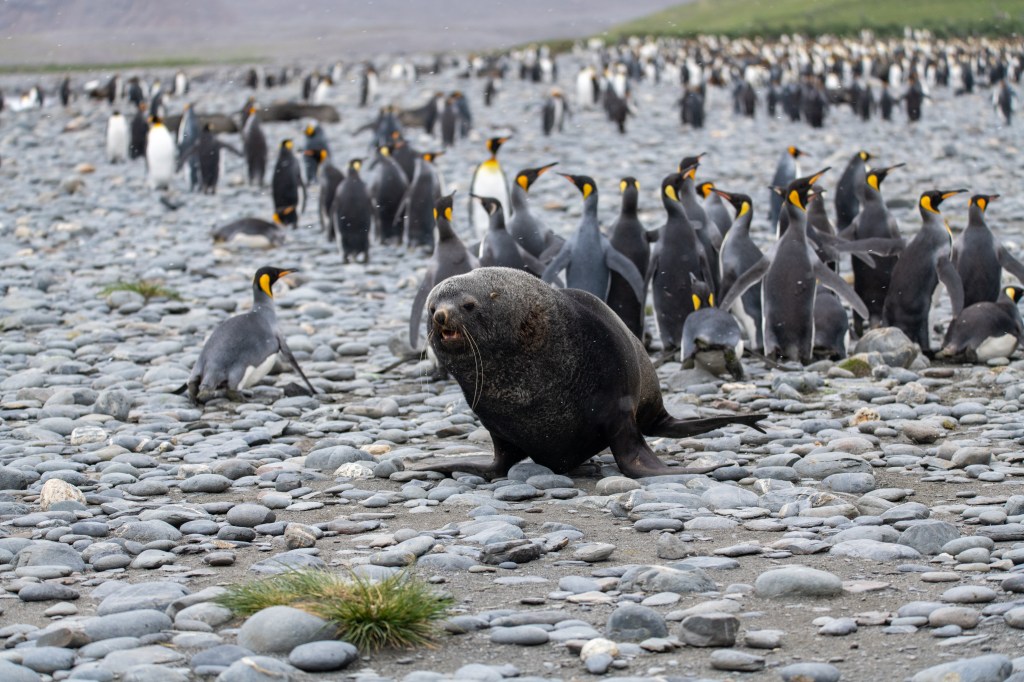

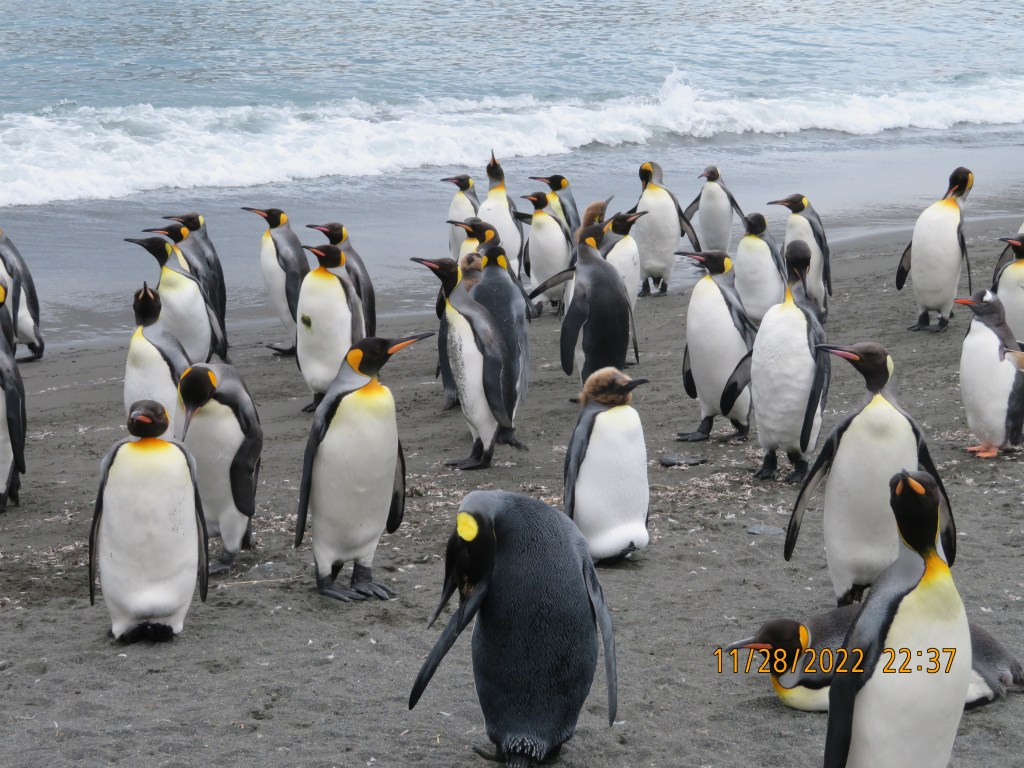
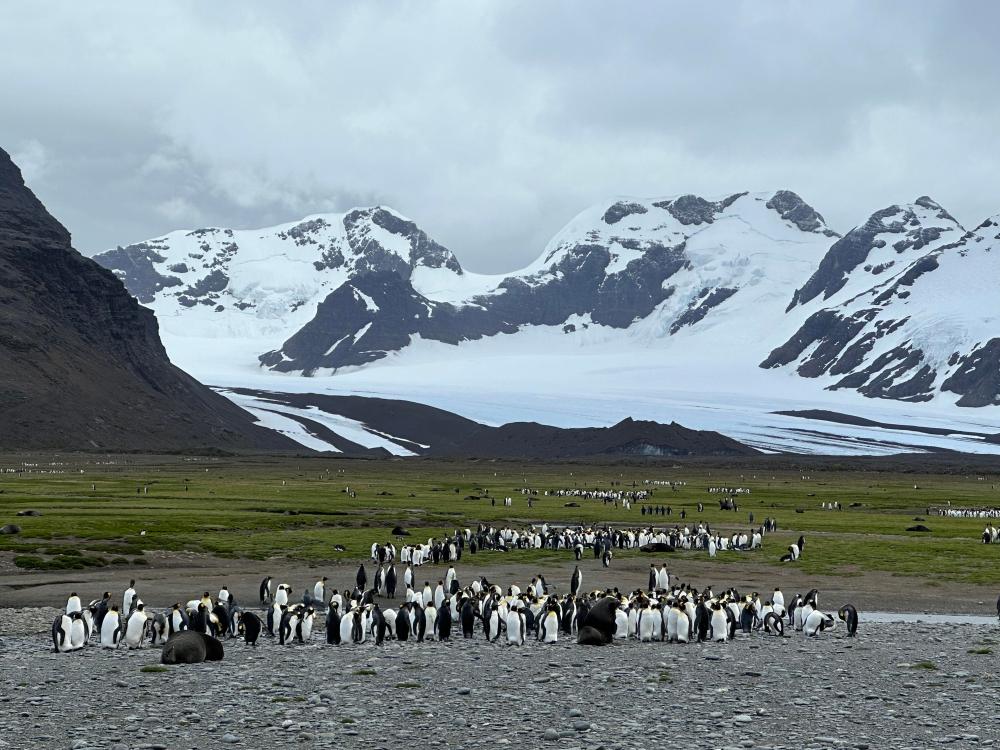
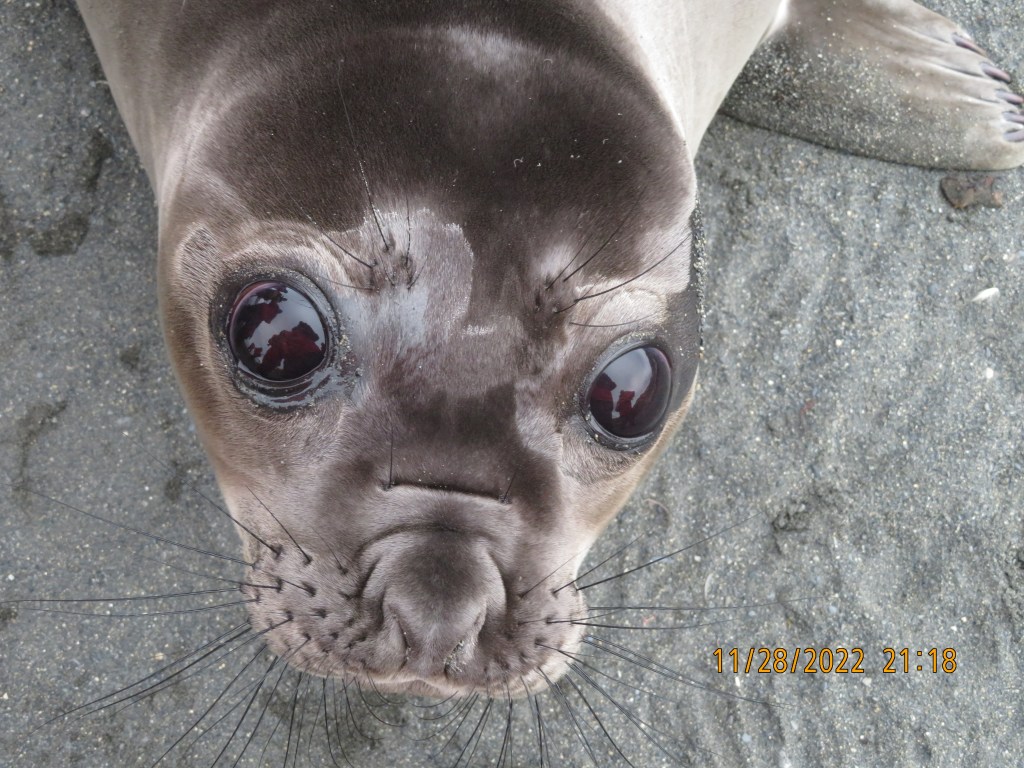
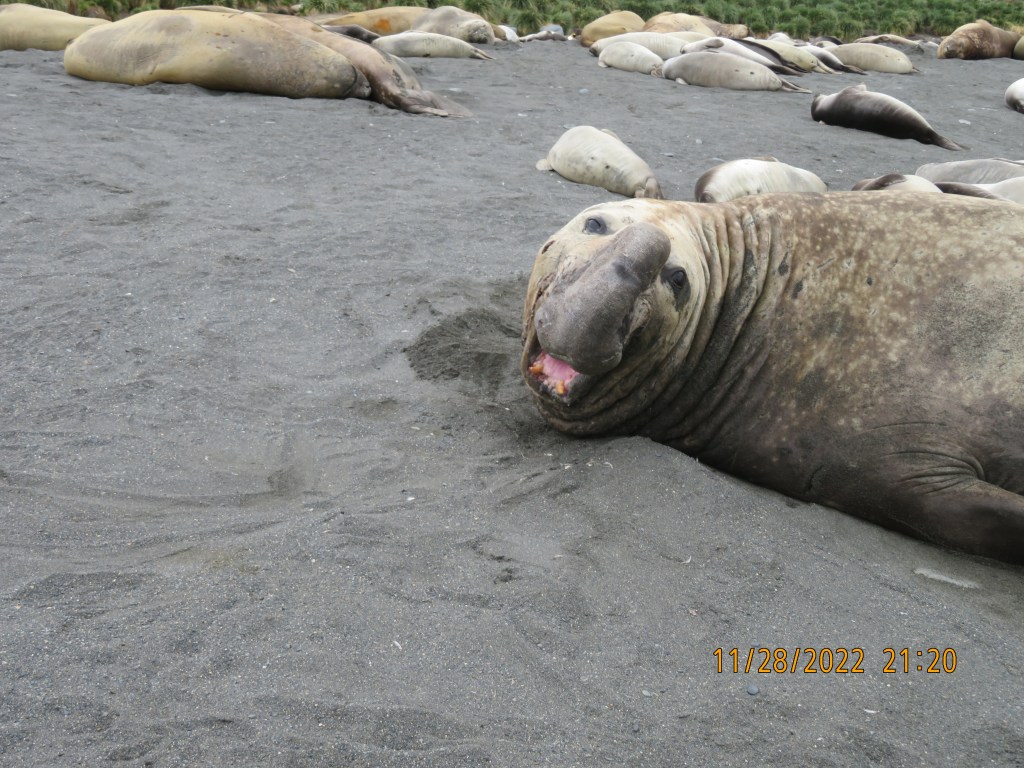
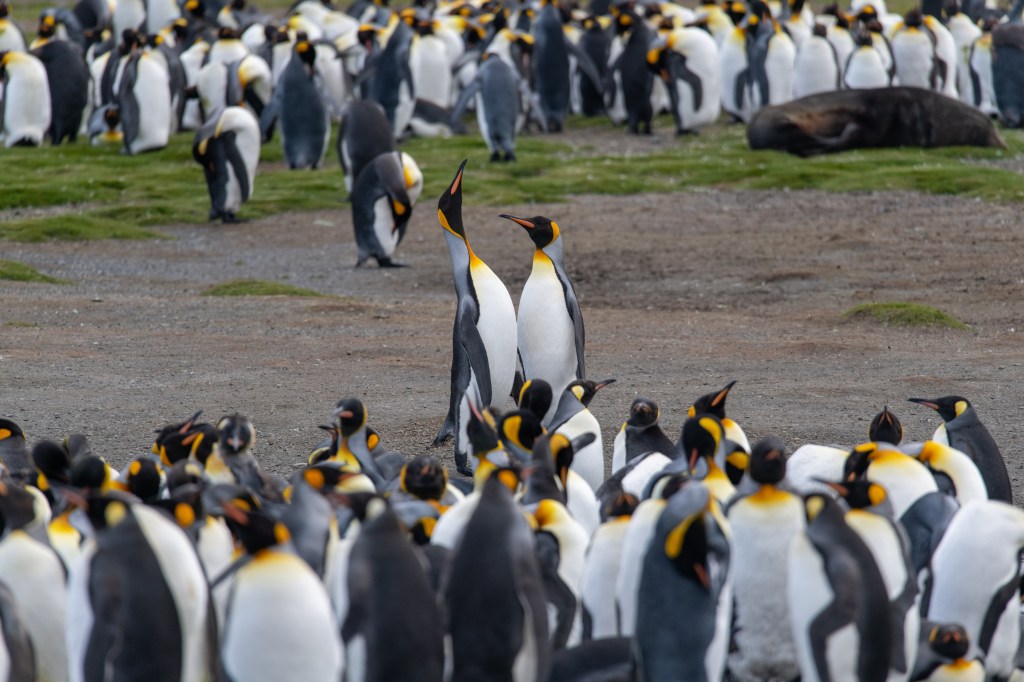
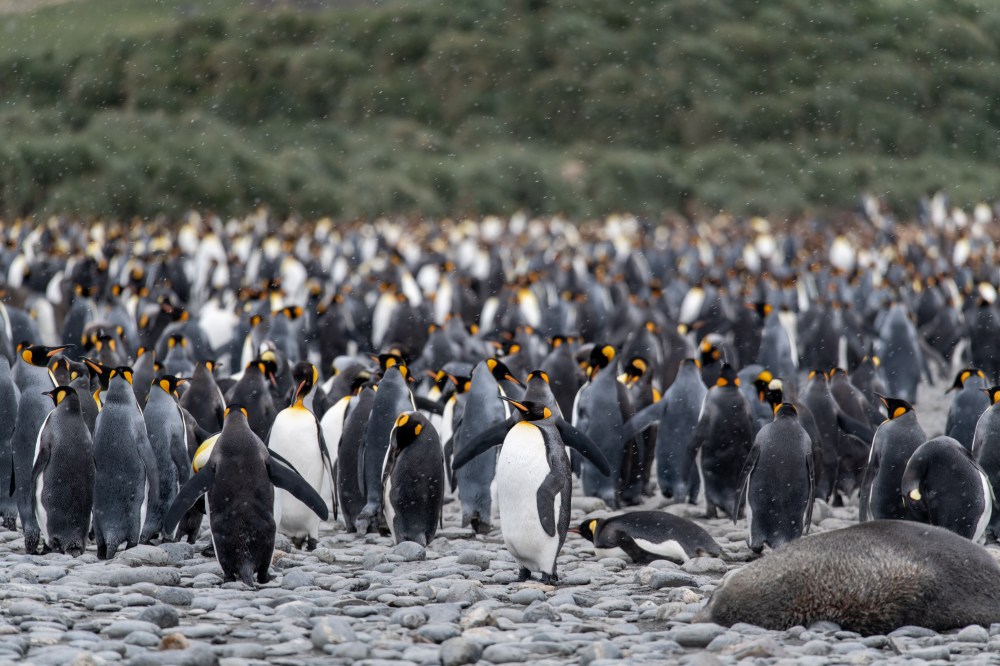
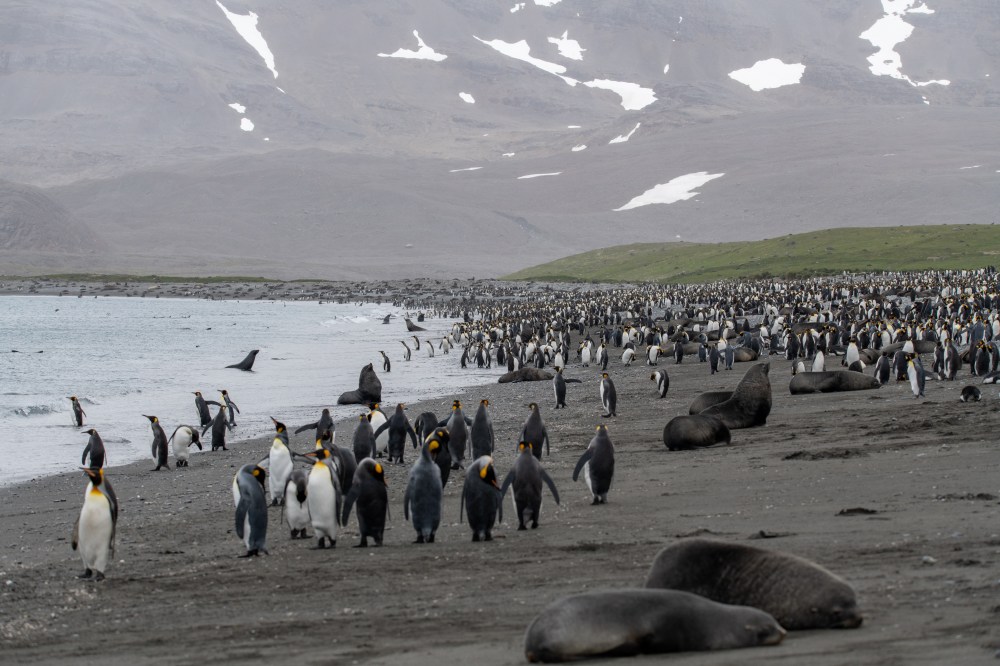
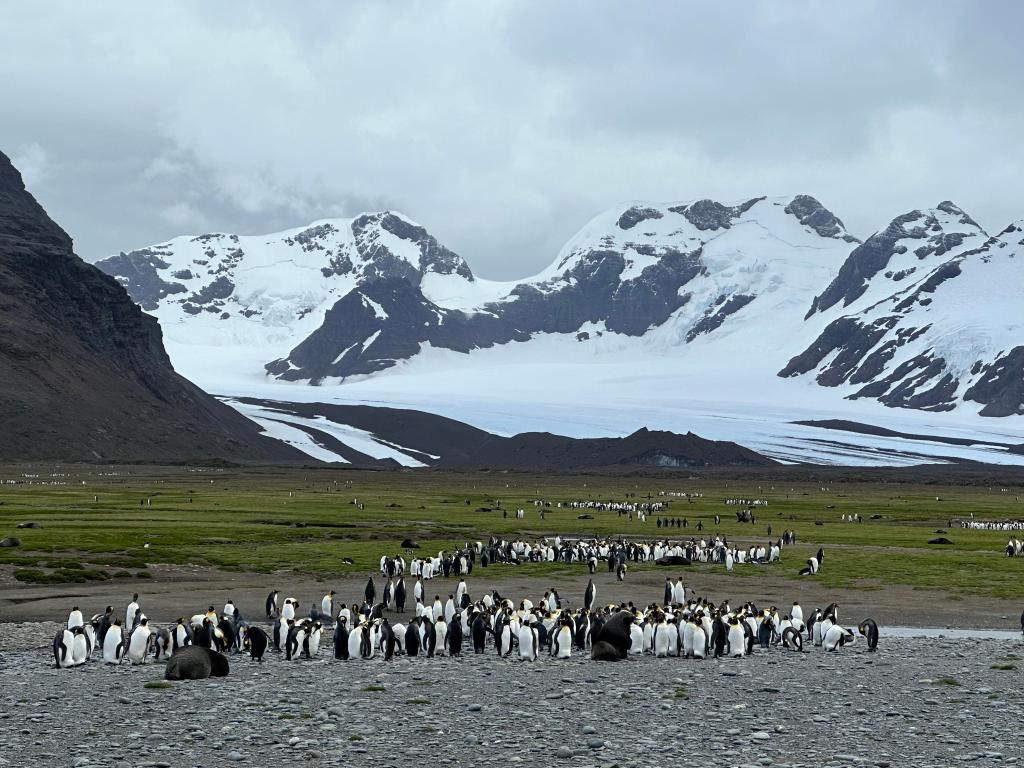
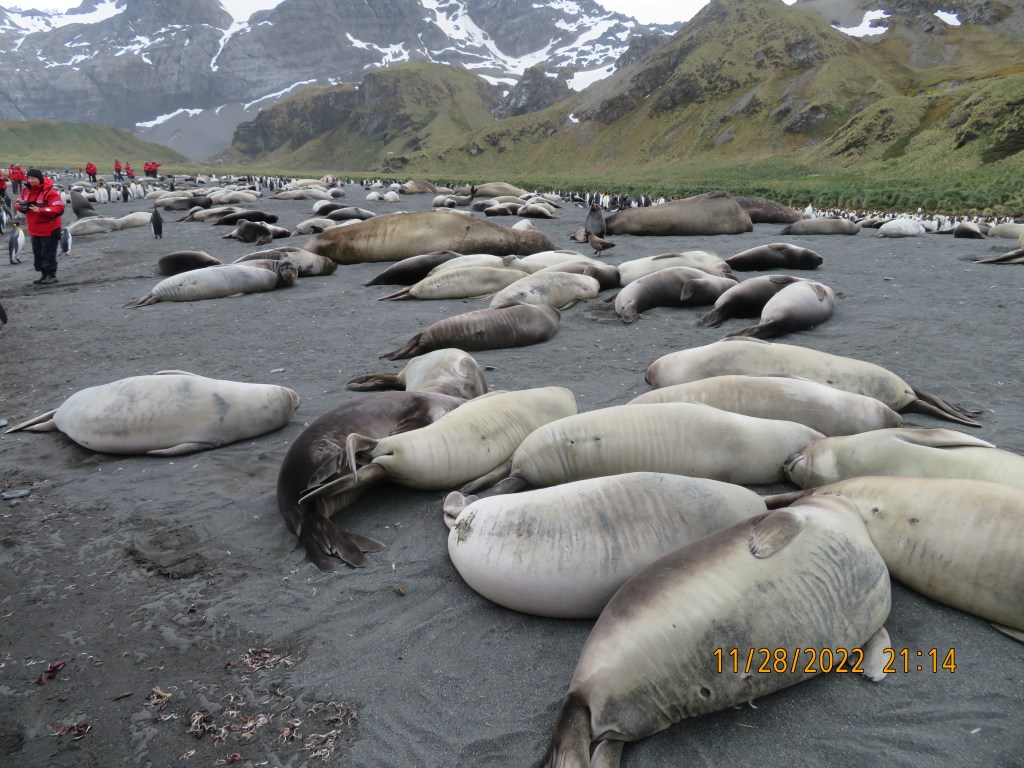
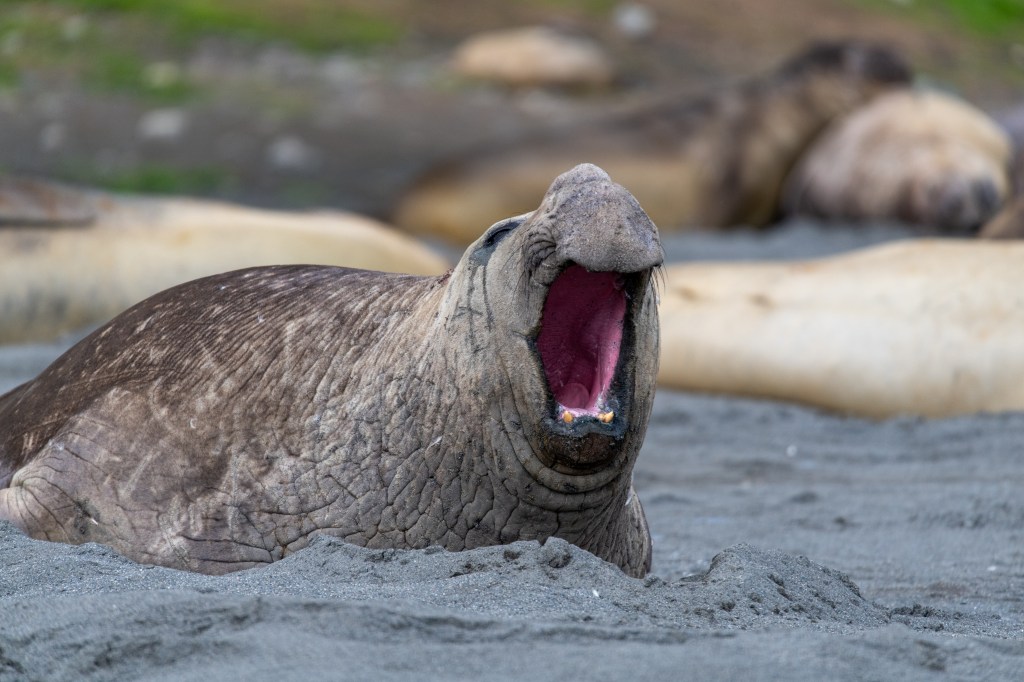
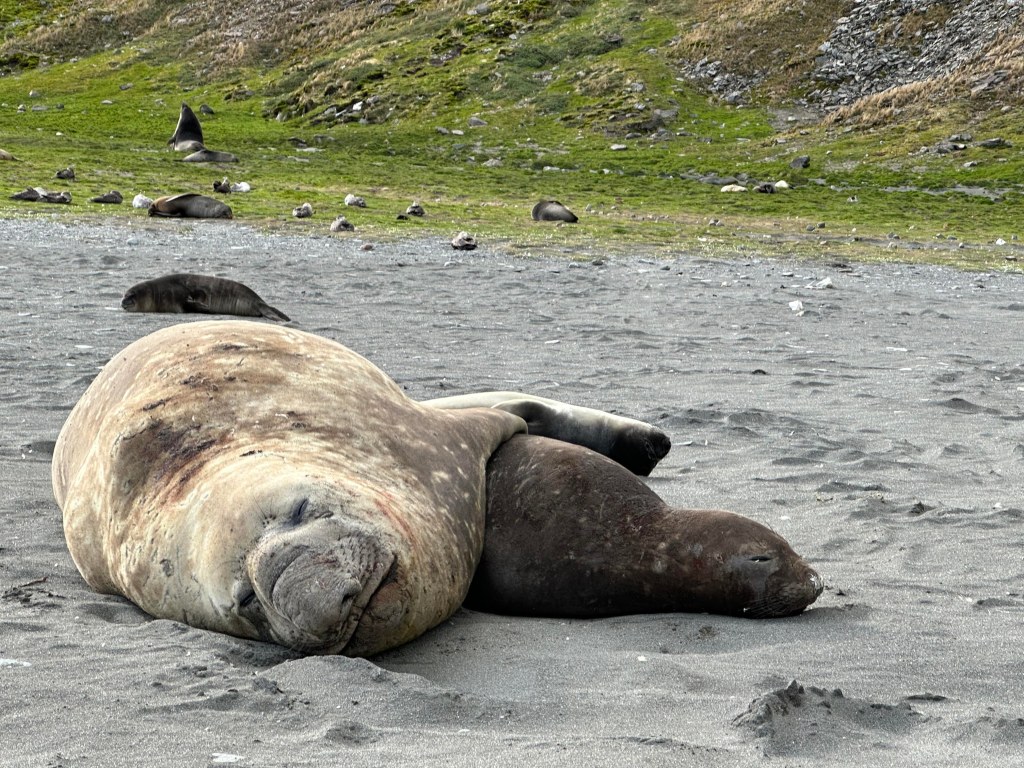
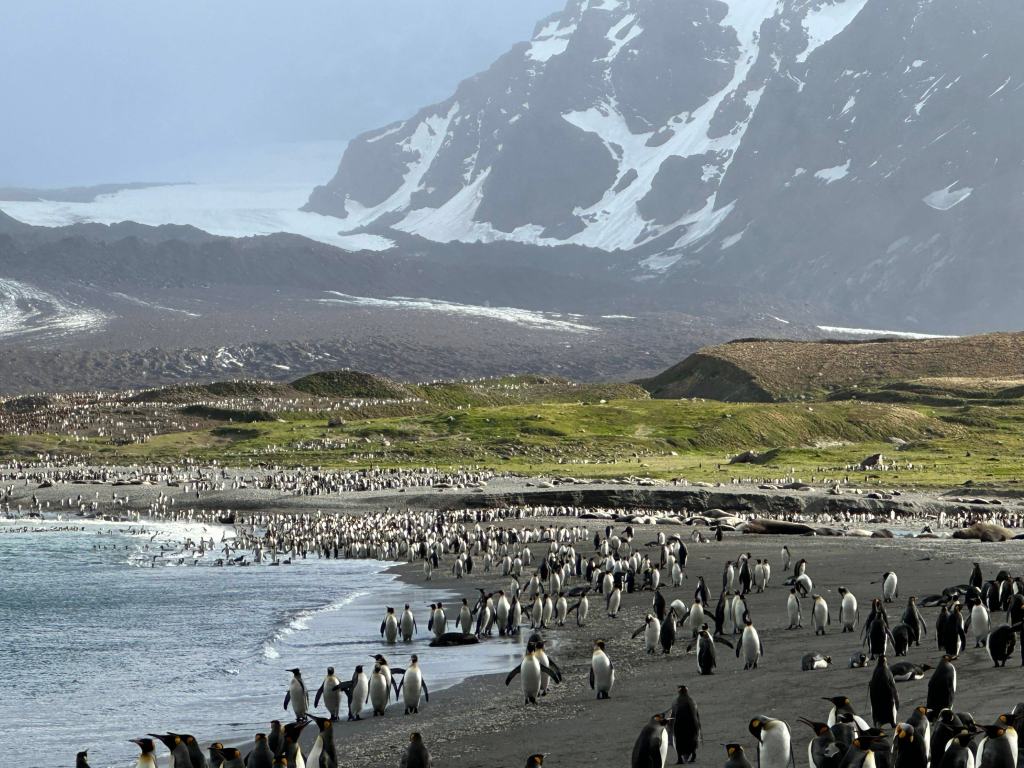
Our first landing was Salisbury Plain, the largest open “flat” spot on the island, home to the second largest king penguin colony on the island (only 200,000 or so), the largest elephant seal population, a bunch of fur seals and assorted sea birds. The naturalists reminded us on the rules of wildlife encounters as we got on the zodiac boats: they have the right of way, stay 15 feet away at all times, fur seals are grouchy and their bite is bad (really, wouldn’t have figured that out) but don’t run away from them, stand your ground and look big. Or hang out with a tall person, I’m 5 ft 1, that’s my strategy. All that goes out the window as our zodiac boat approaches the landing site. Fifteen feet? Animals cover every square inch we can see, with a few yellow and red jacketed humans to guide us on the path between. With no land-based predators, these animals have no fear of humans, on the contrary some are quite curious. You step out of the boat onto the beach to see the beautiful king penguins everywhere, elephant seals in clumps up the beach, clusters of fur seals, some with newborn pups, scattered around. It is absolutely overwhelming, breathtaking, mind bending. Words truly fail. We walk up the beach toward the main penguin colony, stopping or detouring to avoid aggressive looking fur seals. The wind is blowing a little cold snow in our faces, but the scene around us is so mind boggling that we just brush it off. We can’t get too close to the hundreds of thousands of nesting penguins up the mountain, but there are plenty making their way across the beach. We stand and watch them, smiling at the tiny fur seal pups and the napping elephant seals. Magic, awe inspiring, that’s all I or anyone else lucky enough to share the moment, can say.

Entertainment is not the focus of expedition travel. A few musicians, maybe some dancers, and frankly everyone is pretty worn out by the end of the day. Doesn’t mean there aren’t opportunities for fun. We came up the stairs after dinner and saw the dancers lined up, Dave jumped right on in! Ended up being a blast of a dance party with the now famous Cindy (married to the now famous Dave) dragging people into the action.

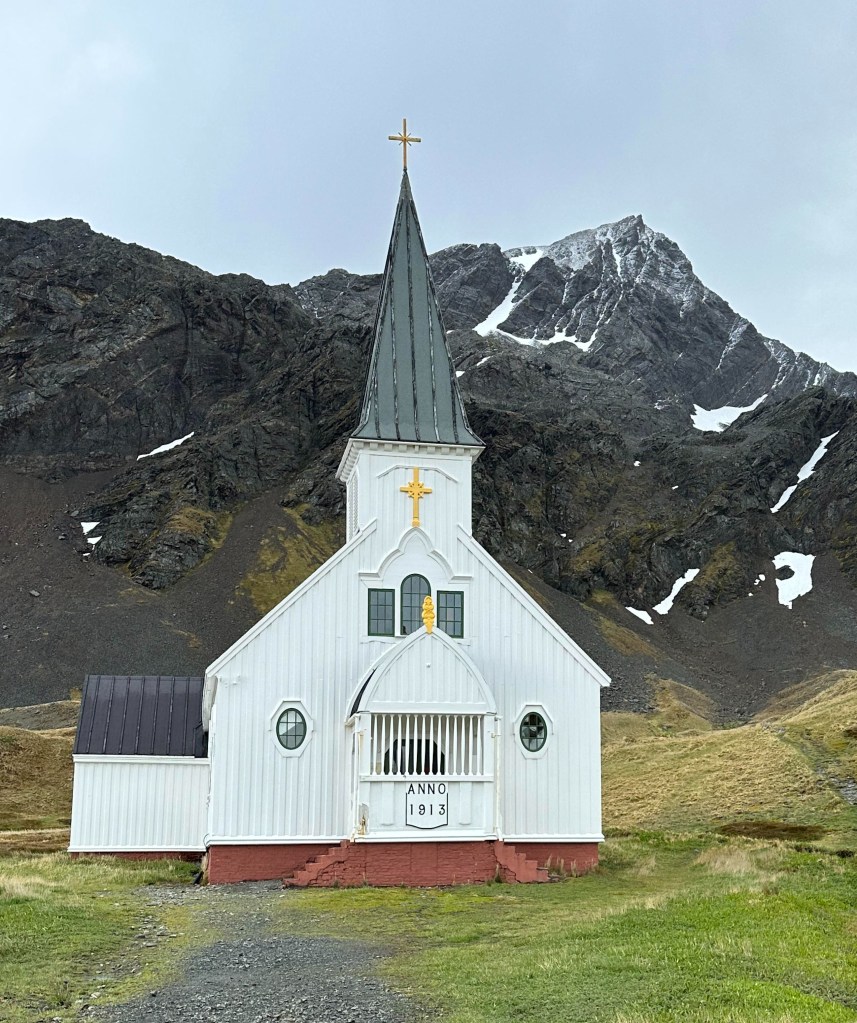
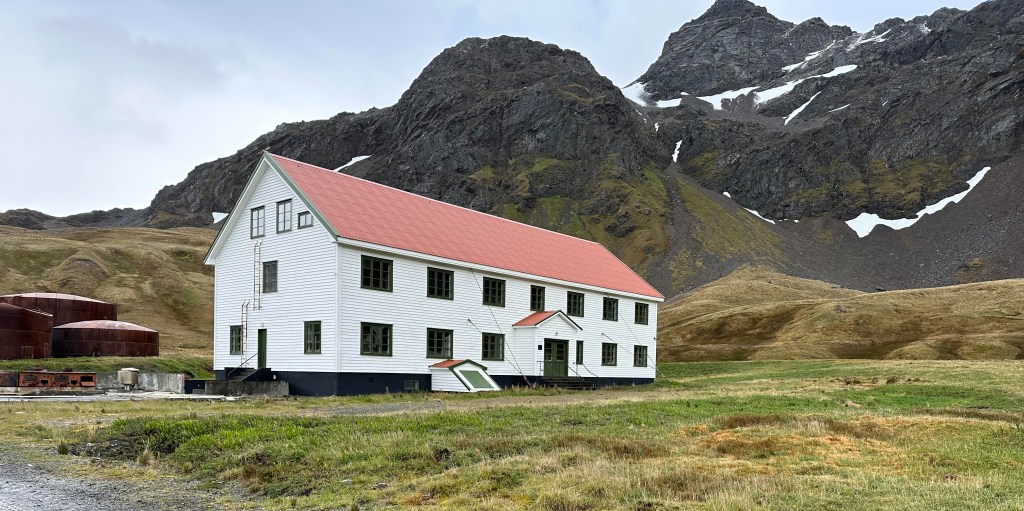
Next stop- Grytviken. You will see more people here than anywhere else on the island, but not many. Once the home to 500 whalers, it now resembles a ghost town- with a gift shop. Well, there’s a post office and a museum (where you’ll find the gift shop). Museum staff offer walking tours around the remains of the whaling station, a sad reminder of the brutality of that industry which killed over 3 million whales. It’s a lesson in hubris. Periods of exploration always seem to be followed by exploitation of what at the time seemed limitless resources. Bison, seals, whales, just a few examples. The largest creature on Earth, the blue whale, is one of the most endangered, 200 years ago there were estimated to be 350,000 roaming the oceans, now 15,000 to 25,000. Many species are coming back, humpback whales for example, have made a remarkable recovery. Fur seals, who were hunted almost to extinction (1.2 million before 1825) are now numerous on South Georgia.

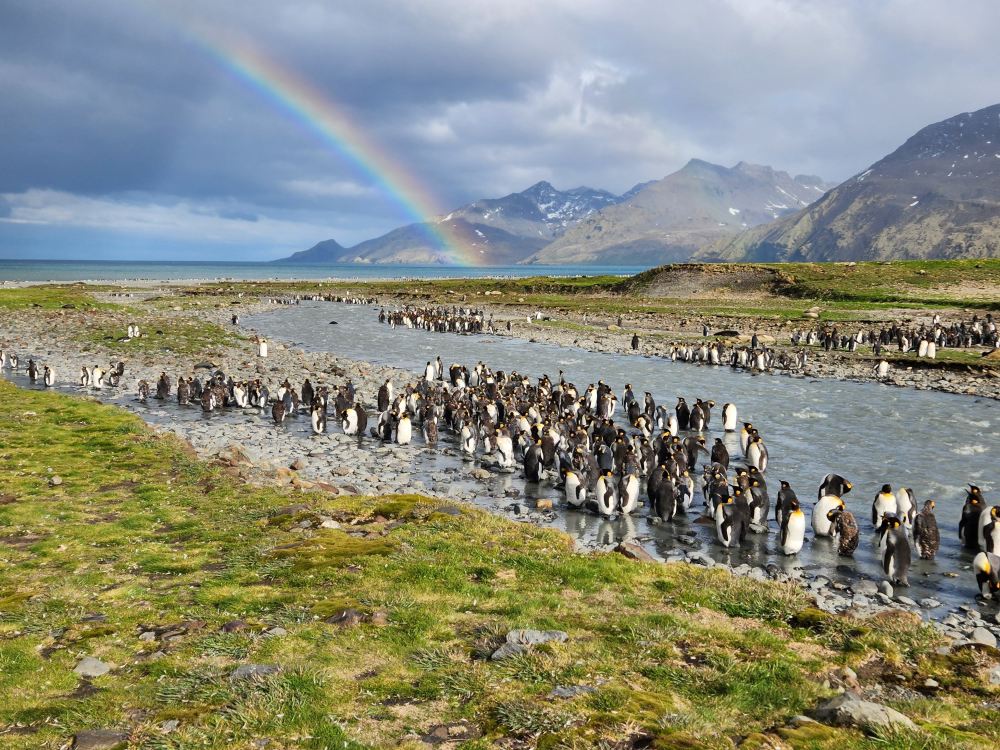
Back to nature… late that afternoon we landed in St Andrews Bay, home to the largest King Penguin colony on the island (300,000 or so), plus elephant and fur seals. As we wandered down the beach to a glacial river, then alongside it towards the glacier we were treated, to more penguins than we could count and a fantastic double rainbow over the ship. Spectacular.
We were fortunate to be able do so many scheduled landings on South Georgia. Weather on all these expeditions is variable. Katabatic winds can seep down from the mountains in the blink of an eye. Sunshine yields to snow in another blink. The parade of storms that continually circle Antarctica and make the Drake Shake (or not) reach their tendrils far into the Southern Ocean. Sometimes you get lucky. We did.

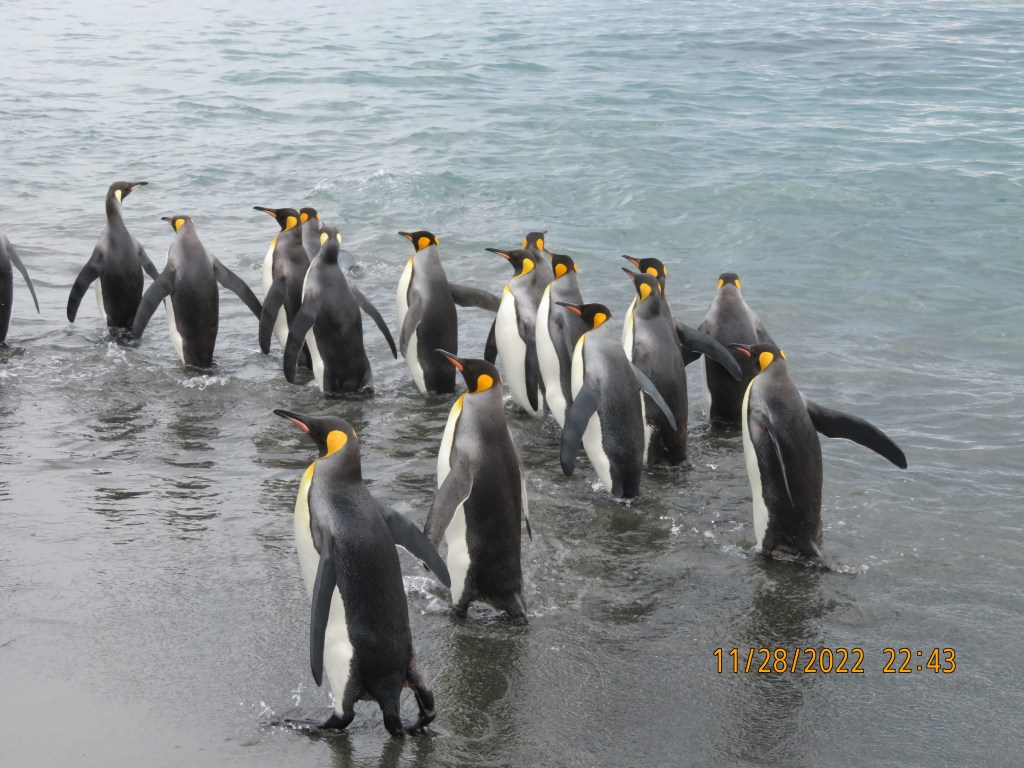
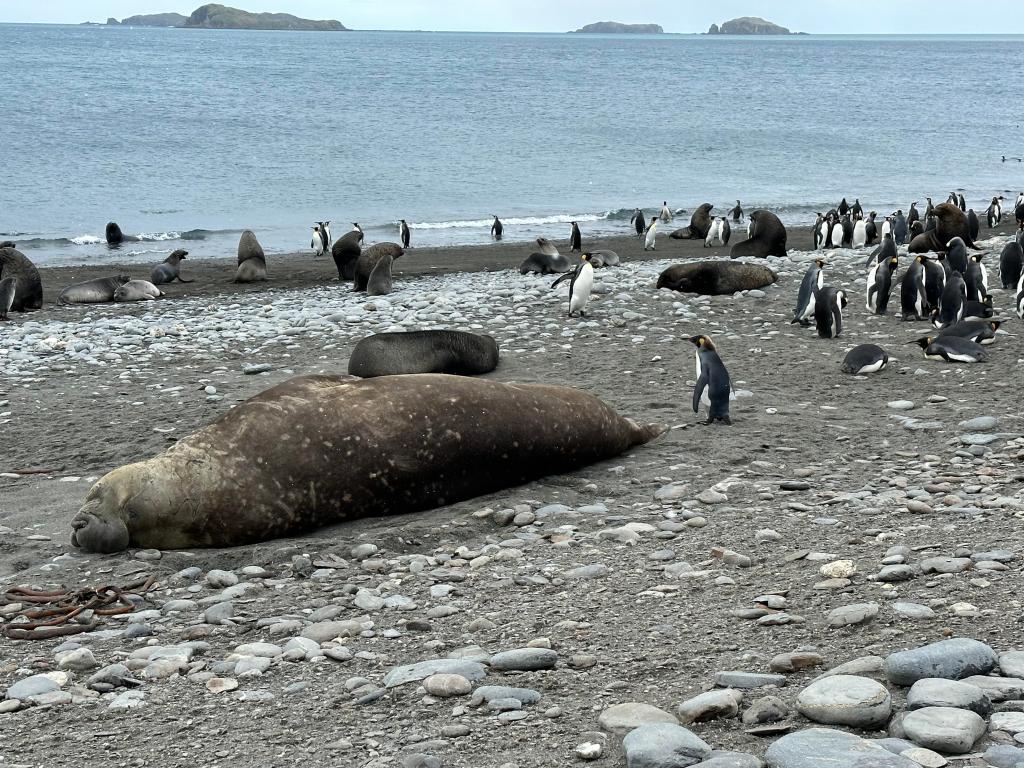
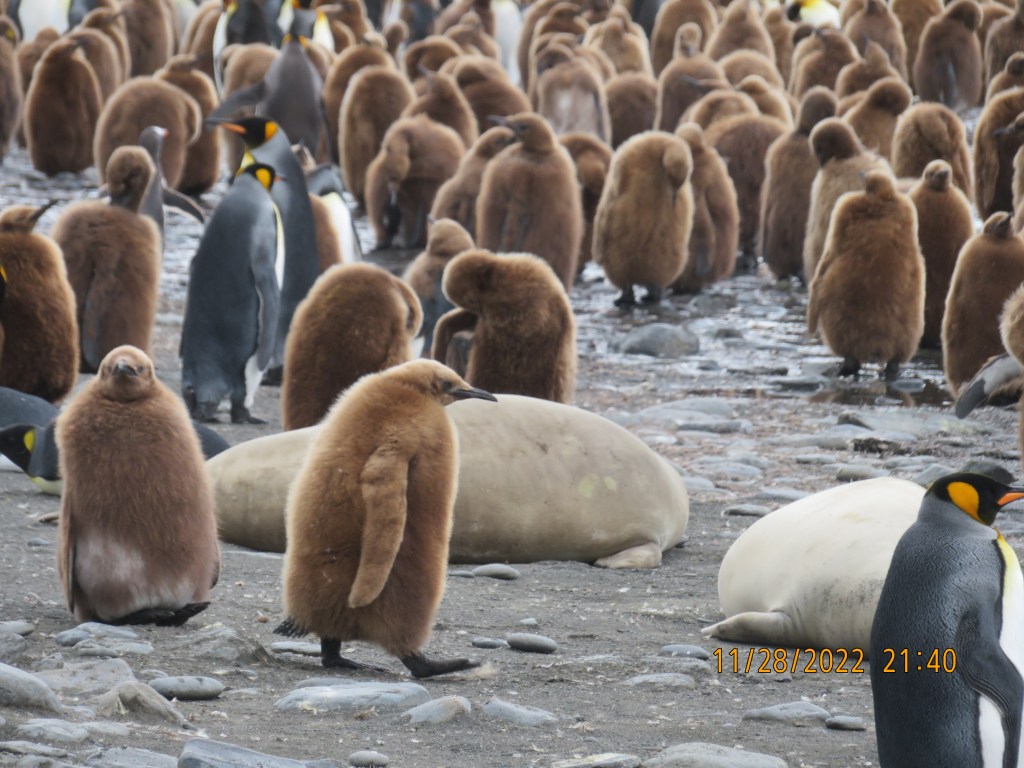
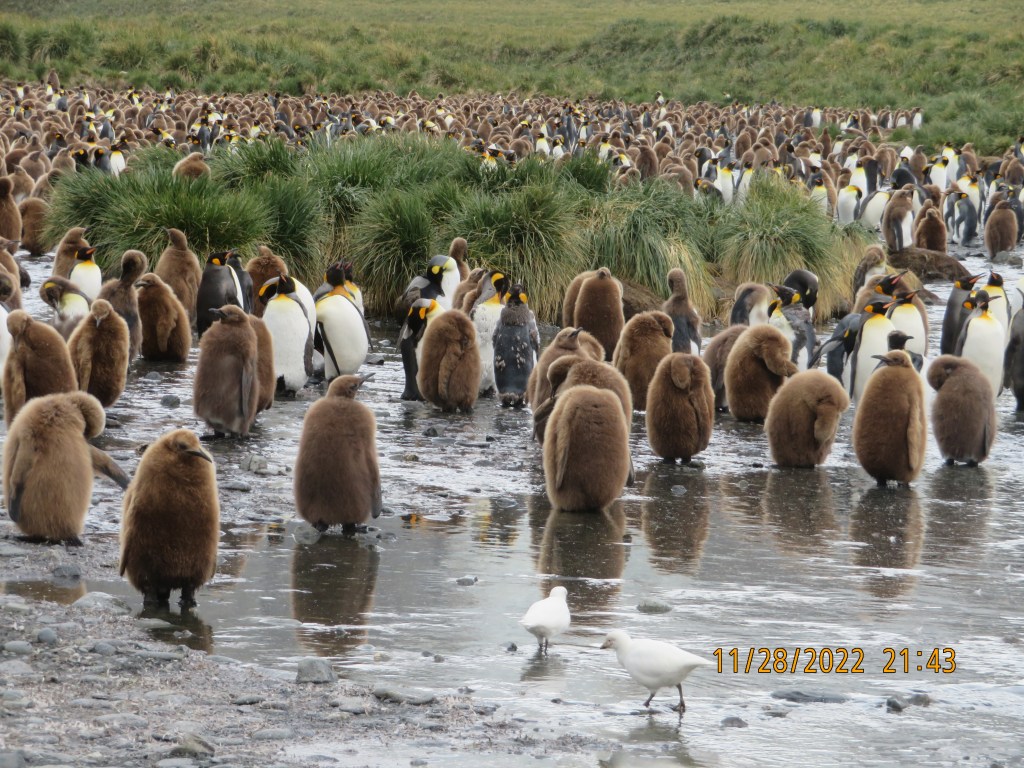
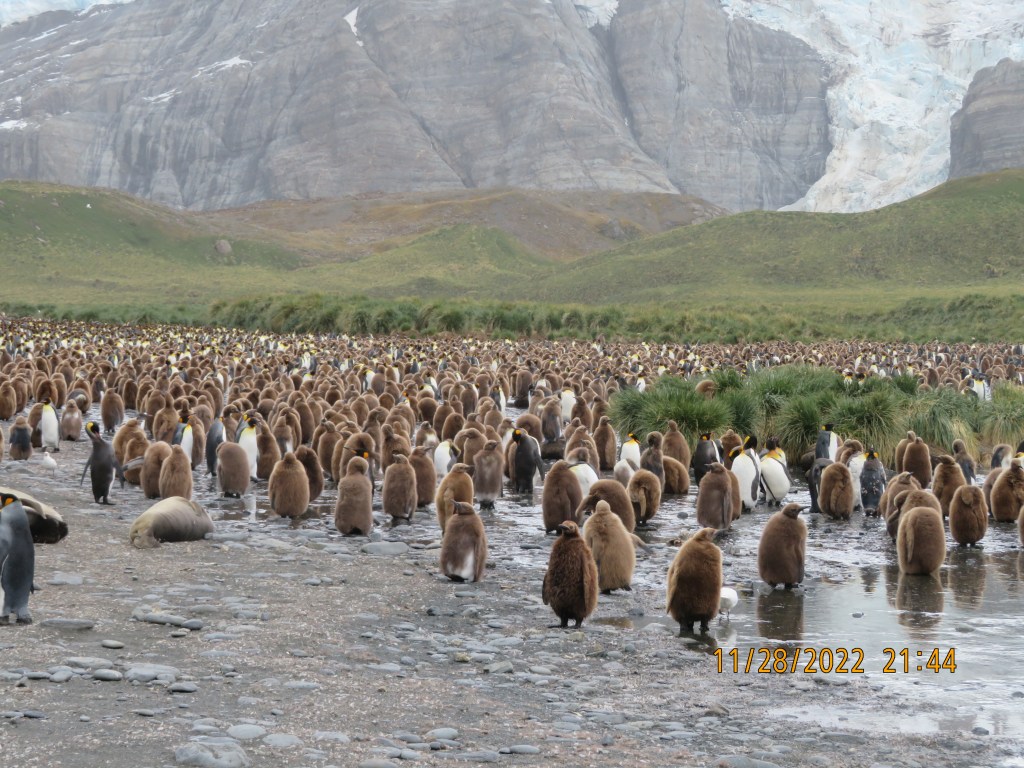
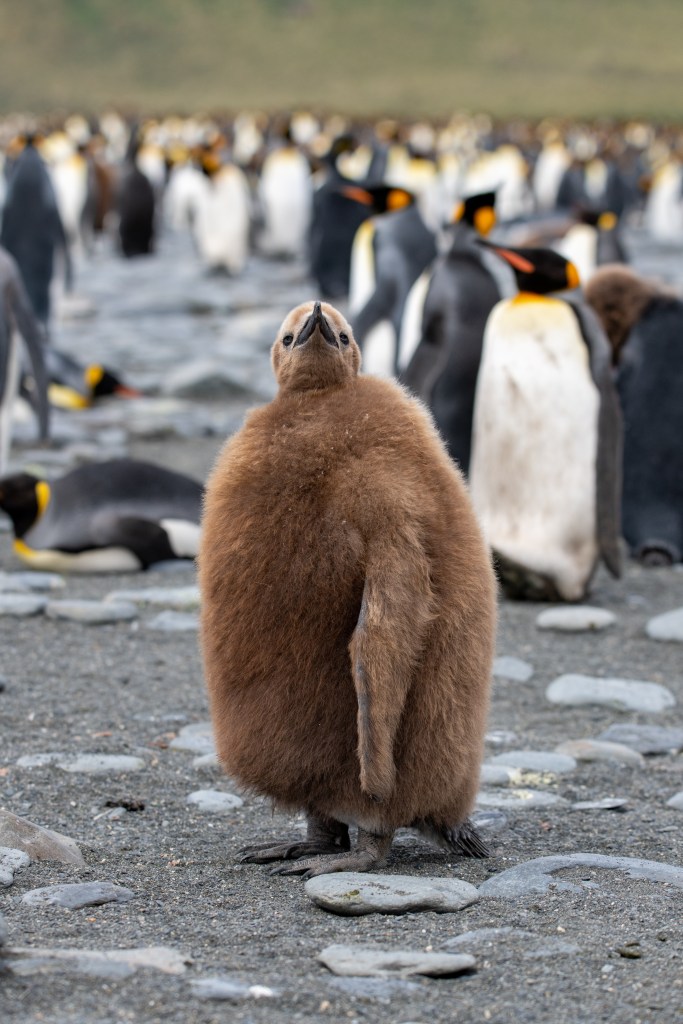
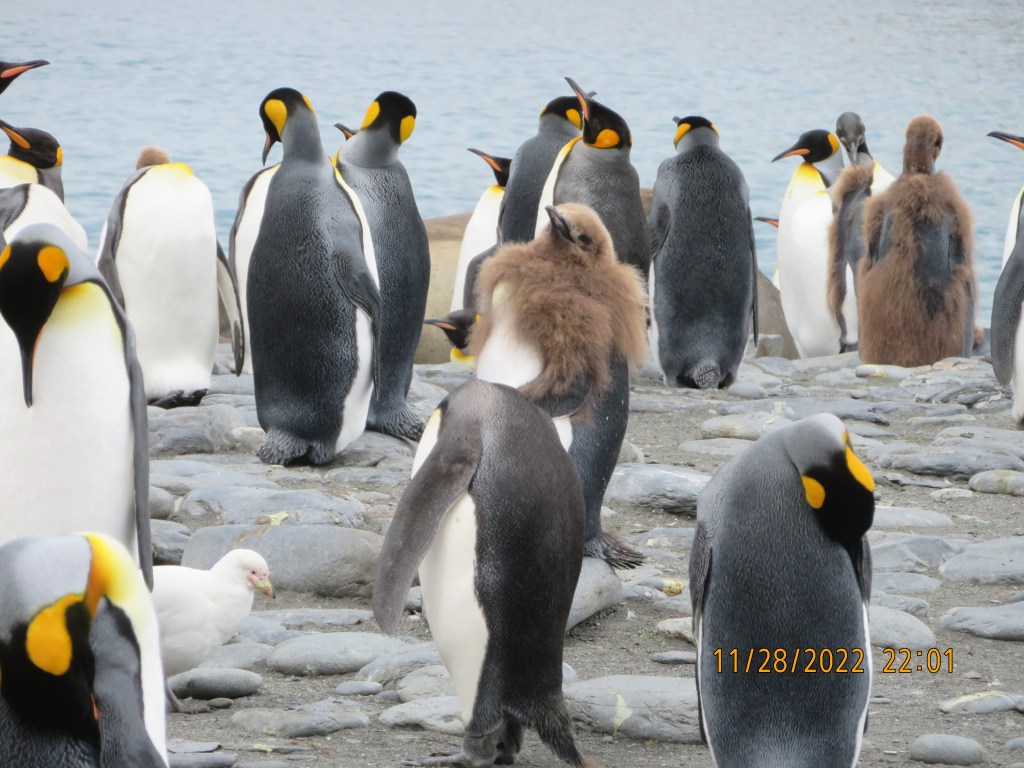
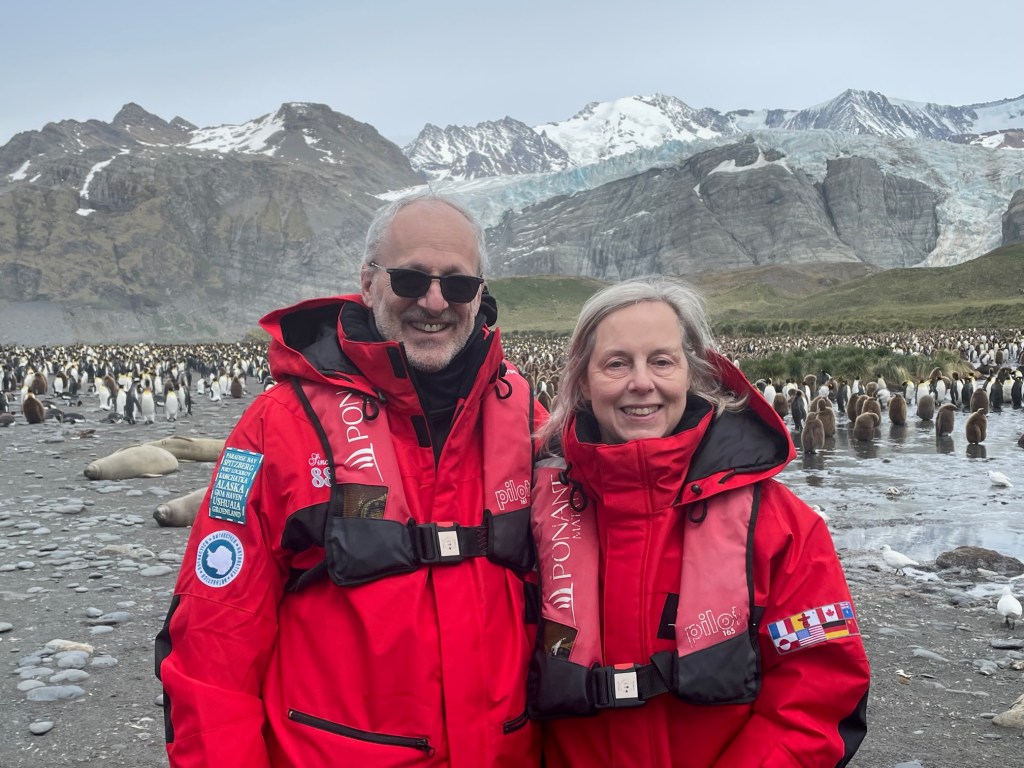
Our last stop on South Georgia was Gold Harbor, a beautiful bay surrounded by sharp peaks and glaciers on the southeast end of the island. There we were greeted by hoards of King Penguins, many molting their brown “baby feathers” in favor of their adult tuxedos.
What was the highlight? There were so many, every stop seemed to top the one before. One day a group of us met on the beach – wow isn’t this amazing- did you see, can you believe it!!! We had been told about one way emperor penguins kept warm- forming a circular clump that continually rotated, those in the center moving out, the outer ring rotating in – thus keeping a steady temperature. So beautiful and wonderful was the experience- a moment of profound joy for the beauty of what we were seeing and gratitude for the wonderful people we were seeing it with- a spontaneous group hug formed, “penguin circle” someone called- rotate right, penguin noises, rotate left… laughing, tears in our eyes at the sheer overwhelming wonder of the place, the experience and the people. One of many magic moments of this stupendous adventure.
Next time: heading to the White Continent
 Explorer Barb