Travel opens us up to new experiences, sometimes to those you neither expect nor desire. That’s the roll of the dice. No matter how carefully planned the itinerary or how many contingency plans are in place, stuff happens. It rains on Derby day, the tour guide comes down with the scourge of the moment, the car breaks down in the middle of somewhere you didn’t want to be, it happens. Sometimes these little detours guide us to spectacular gems we never would have found. Or not.
As my dear spouse and I get ready to fly off to Buenos Aries on the first leg of the Antarctic adventure, I can’t help but think back to our previous visit there, the family adventure otherwise known as the trip from hell. There were some good moments, some wonderful memories, and then there was the rest.
I am a fairly experienced traveler; always a reader, I love history and tales of other places and cultures which implants a desire to see the places so tantalizingly described. My dad traveled internationally extensively for his job, always returning with souvenirs and stories of destinations all over the globe. He saw firsthand how Americans got the “Ugly American” reputation and taught us early how not to be one. How to hold your knife and fork like a European, what not to wear that would show disrespect to your host, how to order from a menu when you have no idea what anything is. If you like your beef well done (the only way he would eat it) don’t even try, lest you send the chef into an apoplectic tizzy. He ate a lot of omelets.
Americans do not have the best reputation abroad. Sometimes deserved, sometimes not, most of the world views us as arrogant boors tromping about the globe with an unshakable believe in our inherent superiority. US foreign policy and a few prominent political figures have not helped that view. Though we cannot by ourselves change these long standing beliefs, we can do our little bit by trying, as travel author Rick Steves recommends in his books, to travel like a “temporary native” by immersing ourselves in local cultures rather seek to duplicate our own wherever we go. Trying a few words of French goes a long way.
This is easier in some parts of the world than others. English speakers have been traveling the globe (and subduing much of it) since before the US was a country. I am not totally sure why much of world views Americans more negatively than the British considering that only 22 of the world’s 200 nations were not at some point or other invaded by the British. Maybe it’s the accent. Anyway, for good or for bad, in Europe you can get by without a command of the local language. Countries are small, languages are many (20 major languages) and thus signage almost always contains multiple languages. As a result of British colonialism or US economic power, English is taught as a language of commerce and tourism. You can be standing in line at a train station in a small town in Poland (true story) and if the ticket seller does not speak English, someone behind you in line probably does. As time goes on, automation, things like electronic ticket machines where instructions are available in multiple languages, help the hapless traveler.
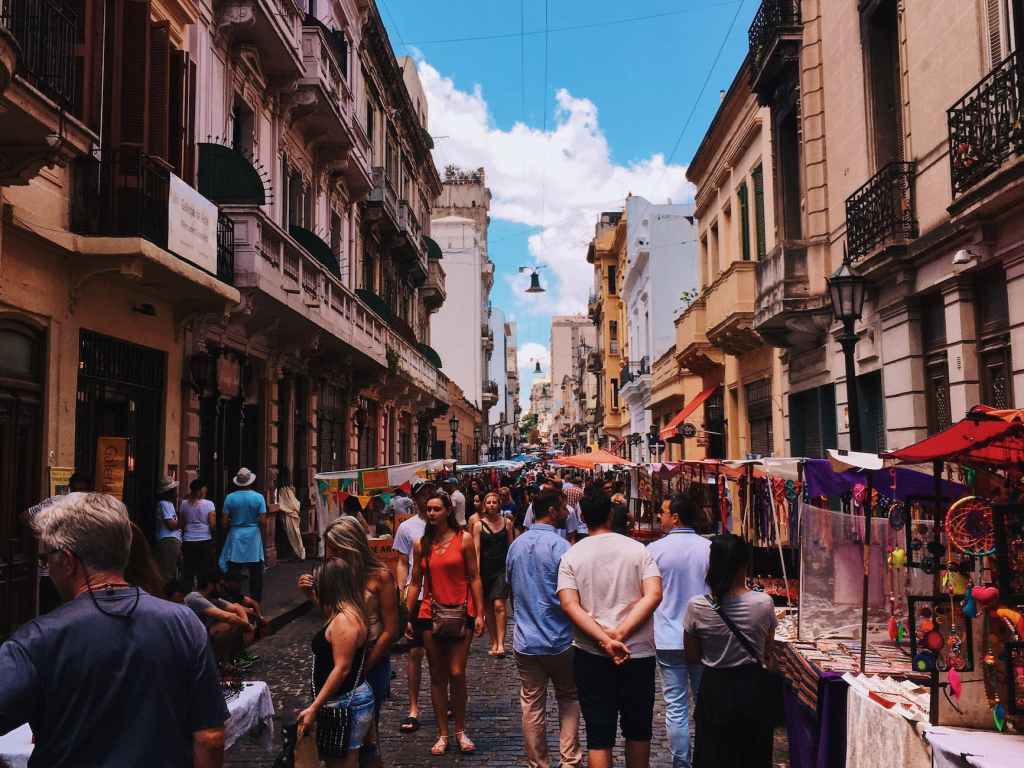
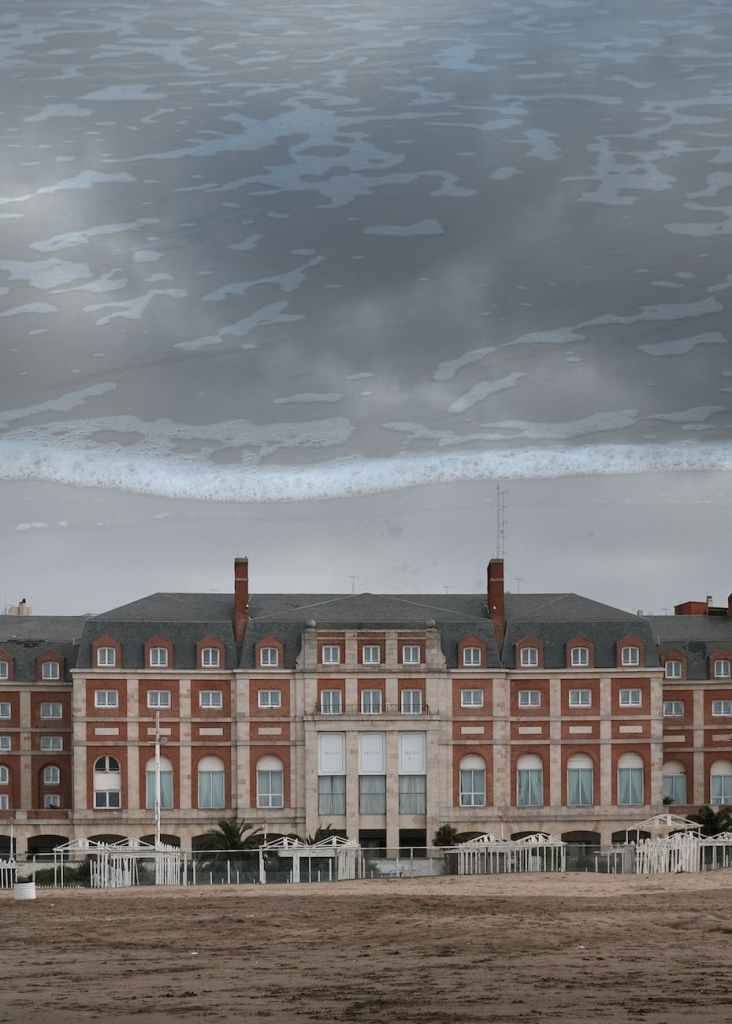
This is not the case in Latin America, that gigantic continent with two major languages; Portuguese spoken in Brazil, and Spanish almost everywhere else. And unlike in Europe, no omnipresent English signage other than for major things like “exit”., which in our case was not helpful.This makes sense considering the thousands of miles to an English-speaking nation. But this did not occur to the weary voyagers traveling on an Argentinian airline, changing planes in Brazil after an overnight flight. Surely signage would help us figure out how to find the gate for the next flight? Or airline personal would be able to direct us? Au contraire, not that this phrase would have been understood…. It is possible that the gate agent was telling us what to do, in Portuguese. And we had no better luck approaching other airport/airline personnel; even showing a boarding pass, hoping for hand signals, a map, anything… So here is what thus far has proven a sure-fire way to find an English speaker in any international airport in the world, the duty-free shop. Typically located in impossible to miss intersections, there you will find those good looking, friendly sounding (probably commissioned) salespeople hawking all kinds of overpriced merchandise who can help you on your way. Perhaps with a few extra items to carry on your journey.
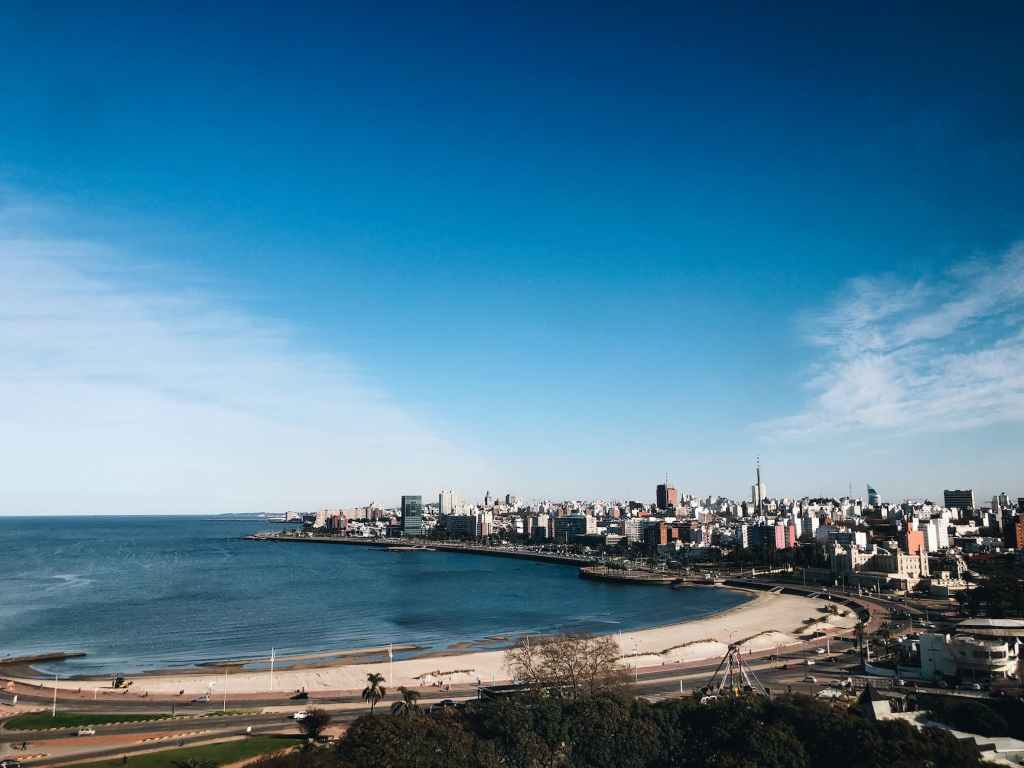
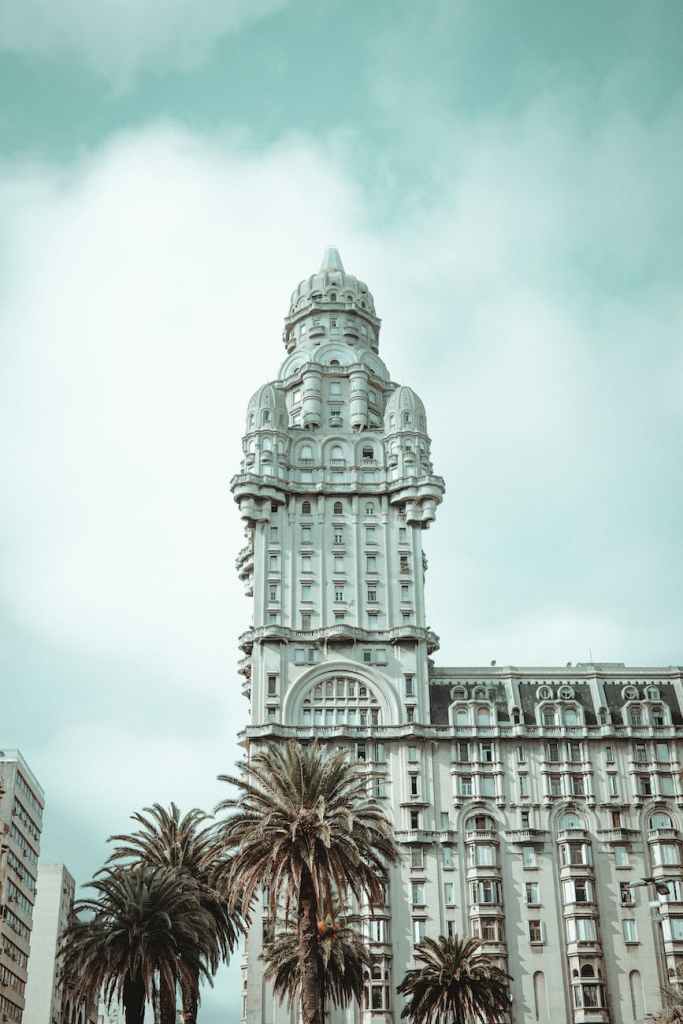
Which we finally found and thus made our way to our first destination, Montevideo, Uruguay, pictured above. With a goal of racking up an extra country (some people competitively count countries visited) and spotting a good fare to Montevideo, we decided to spend a day or two there before moving on to Buenos Ares. Our youngest daughter was just finishing a semester abroad in Argentina and we were joining her to spend Christmas there and then all journey back together to the US. At least that was the plan. It was cool to leave New York on the shortest day of the year and arrive in the southern hemisphere on the longest. Montevideo is a pretty city, we wandered along the waterfront, strolled through the capital area and a few markets. One of the girls had a panic attack, Barb got heat exhaustion, we had a nice dinner and thus muddled through the first full day of the “trip from hell (TFH)”.
Things went more off the rails the next day. We were transitioning from Uruguay to Buenos Aires by way of the bus/ferry combo. It takes longer than the direct ferry but is less expensive and you get to see some of the countryside and the UNESCO World Heritage Town of Colonia. Step one was to get 5 people and their luggage from the hotel to the train/bus station. In London, the hotel would have summoned a “people mover”, a much more interesting way to say a van taxi. That apparently did not exist in this part of the world, so two regular cabs were called, Julie (our exchange student/Spanish speaker) told the driver where to go, shoved two of us and our stuff in the vehicle and off we went. This was before UBER and credit card machines ubiquitous presence in cabs (it may still be that way, I guess we shall see) so arrival involved some fumbling with the fare and the payment thereof and perhaps some questioning by the driver in a language neither of us understood of which entrance we wanted. Since we knew nothing anyway, we gave him some money and got out.
We stood at the curb waiting for the rest of our party to pull up. And waited. As neither of us had a cell phone that worked in this locality, we began to get a tad panicky. Is this the RIGHT station? If so, it looks like a big place, maybe there are more entrances? We could meet them wherever we are to depart from if we had any idea where that might be. Somehow we found each other, I do not remember how as I discovered something important that I had lost, my wallet. Did I drop in in the scramble and confusion of exiting the cab? Was it stolen as we fumbled about the station? In the end it doesn’t matter because it was gone.
After another cab rodeo we all arrived at the hotel. Handing a piece of paper with your destination to a cab driver works in any country that utilizes the English alphabet. We were staying at a small boutique hotel in what is supposed to be a trendy neighborhood. In my professional career I have spent many nights at giant conference hotels and blandly interchangeable chain hotels, so in personal travel I try to avoid them. I can tell you from personal experience that after three consecutive nights at three different Hampton Inns that you become hopelessly disoriented. Am I on the 2nd floor, or the third, which of these three key cards is tonight’s, how did the closet end up where the bathroom is/was? Typically you can find a nice boutique hotel in an area with great restaurants and shops for less than the big chains. We had two big rooms on the fifth floor and the front desk had a “magic phone” where we could call the US at no charge. I spent many hours on that thing and was very grateful for its existence, starting with reporting my lost cards to the credit card companies. Another travel tip for you. Before you leave home go through the cards in your wallet- you won’t need everything. But make sure you and your spouse have some different cards, so if one account gets frozen you still have another. I also put all the cards I bring on a copier and copy both sides as well as my passport, then have copies in different places.
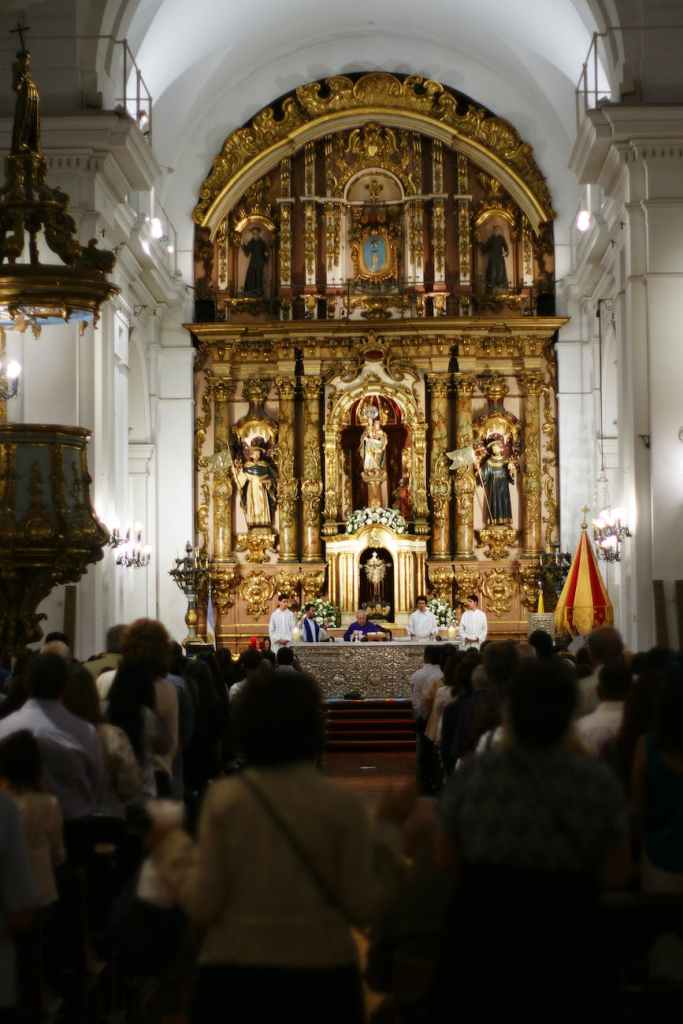
Back to Buenos Aires. We saw some sites and had a magical Christmas. In this largely Catholic country, the big family celebration is Christmas Eve. Shops and restaurants close and things awaken slowly on Christmas day. Picture New York City on Christmas Day. The city that never sleeps really doesn’t. Buenos Aires does. In this city of 15 million people, you could nap in the middle of the main boulevard on Christmas morning. We visited the cathedral which was Pope Francis’s previous post in calm and quiet rarely seen in this locale.
Above is a photo of Eva Peron’s tomb, a popular tourist spot. I think we went there.
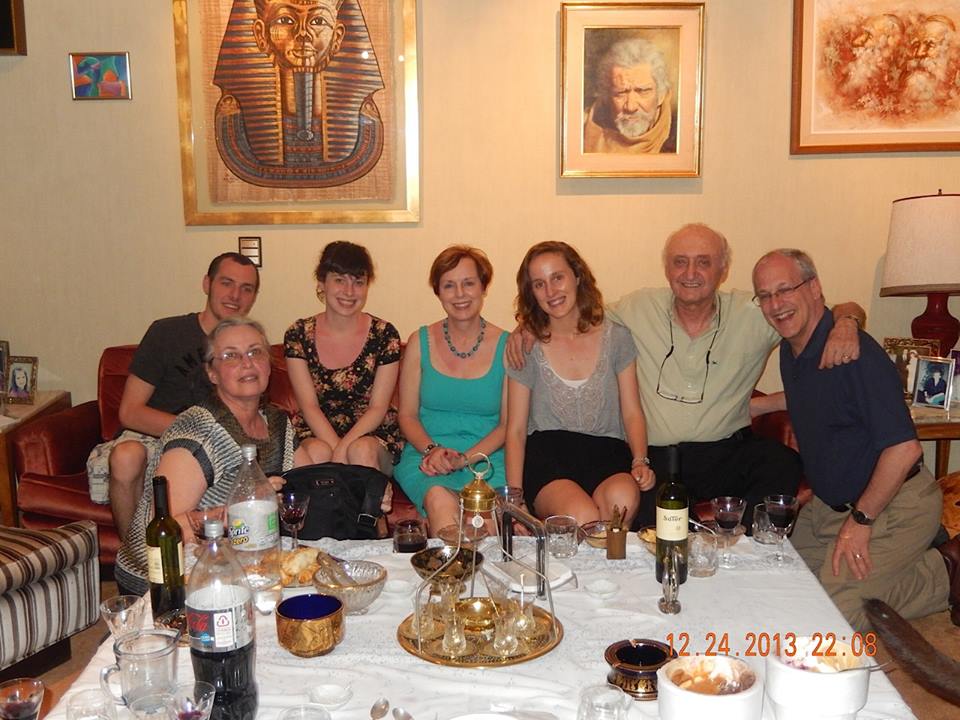
Christmas Eve was the highlight of this trip. We spent the evening with Julie’s host family pictured above), a gathering of multiple generations and languages. The family is Jewish, having come from Germany around World War II. But after hearing their Christian friends describe their big family holiday parties, decided there was no reason they couldn’t do the same. We ate Empanadas and other Argentinian goodies and shared stories in various languages. Some spoke English, all Spanish, a few German. Grandma spoke Russian and French. Some of the kids were learning Hebrew. Tim tried out his German and Rob and I attempted to recall our French, the girls Spanish. We watched fireworks from the balcony at midnight grateful for this magical multicultural moment.
Things began to unravel after Christmas. Over the next few days, the outside temperature rose, and Julie’s did too. She was coming down with some miserable ailment that left her as sick as I have ever seen her. It was hot, really hot, heat exhaustion hot (for me anyway). My regular readers know that I hate hot humid weather. I’ve never liked it, but this trip really notched it up a bunch of notches. The Electric Grid shuddered and groaned to keep up with demand then failed, leaving parts of the city dark. Argentina has longstanding issues, too many to get into here, which were on display during our visit with disgruntled citizens protesting in the streets blocking intersections and disrupting traffic and transit. Planning sightseeing around routes blocked by protestors burning tires (it’s 100 degrees, whose idea was this?) and what has power at the moment takes some of the shine out of a destination. And our Spanish speaker was ailing.

Our hotel partly lost power as well. The elevators didn’t work (glad its wasn’t more than 5 flights) but the hotel had partial power and I moved into one that had AC with Julie who was pretty sick by this time. It was becoming clear that Julie was not well enough to travel, especially as she was traveling on a different flight than the rest of us. So back to the magic phone. Several more times.
So we will wrap this up as I am having flashbacks. I was able to make Julie’s flight a day or so later, bought myself a ticket on her flight and the rest of the crew flew home. Somehow we got Julie’s stuff packed up at her host family’s place, made it to the airport where I half carried the poor child on to a plane bound for the US. Then was the kerfuffle of negotiating seat changes so I could sit next to her. Her original row mate declined to switch saying he had a tight connection and did not want to move the whole three rows back. Sooooo, you would rather sit next to a really sick person instead??? The flight attendant trying to help rolled her eyes (see what we deal with I could hear her think) but other passengers were happy to assist. And I was truly ecstatic to land in Houston however many hours later, then finally back home thus concluding the trip from hell.
The upcoming trip will be our third to South America and at the risk of sounding like the Ugly American here are a few things I now do:
- Fly US Airlines – South American has several airlines, we have not had great luck with the ones we have flown, so ah no.
- From the northern US you will most likely have to change planes somewhere. Doing that in the US is easier, remember all the fun we had in Rio.
- I am a fan of independent travel but have learned the value of travel professionals and where they are most important, like South America and Africa.
So gee, I am really looking forward to our upcoming flight to that big city in Argentina. But it HAS to be better than the last visit, right? Stay tuned my friends, I’ll let you know.
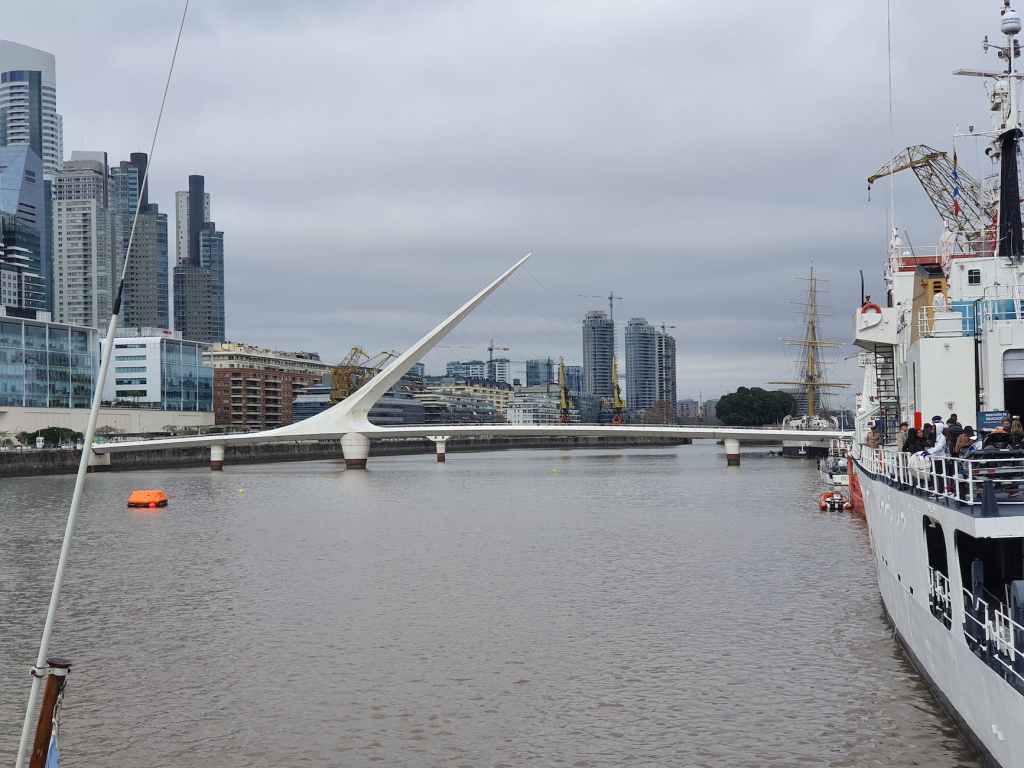
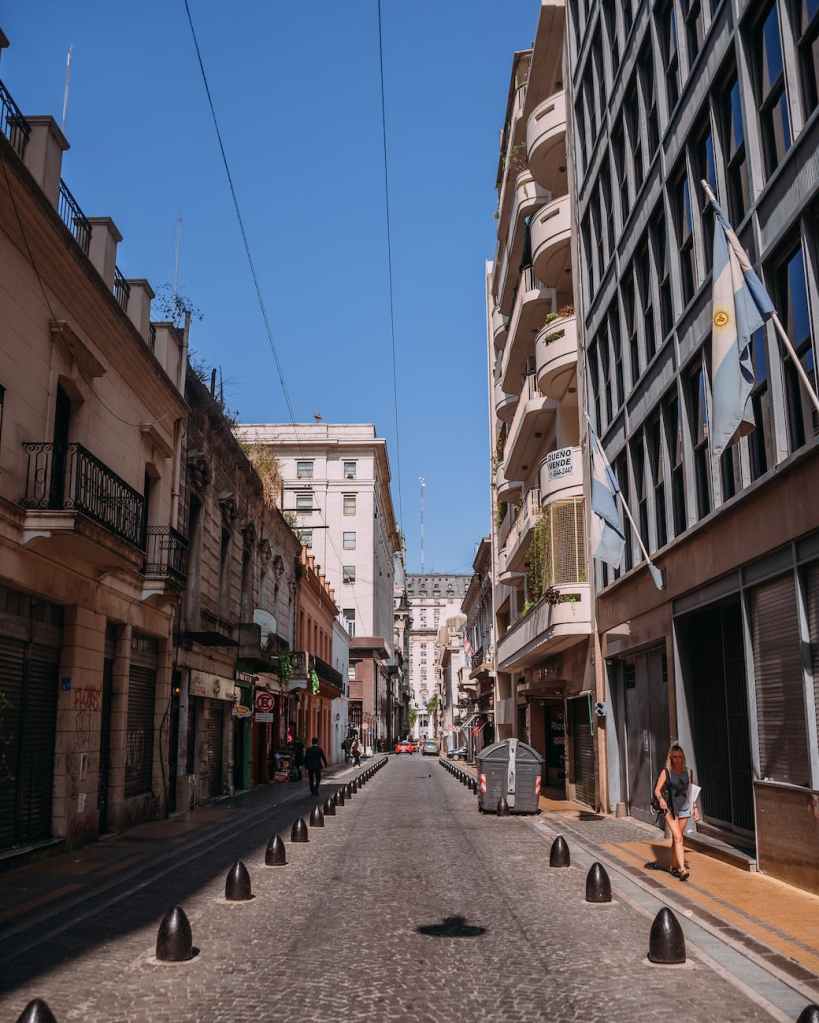
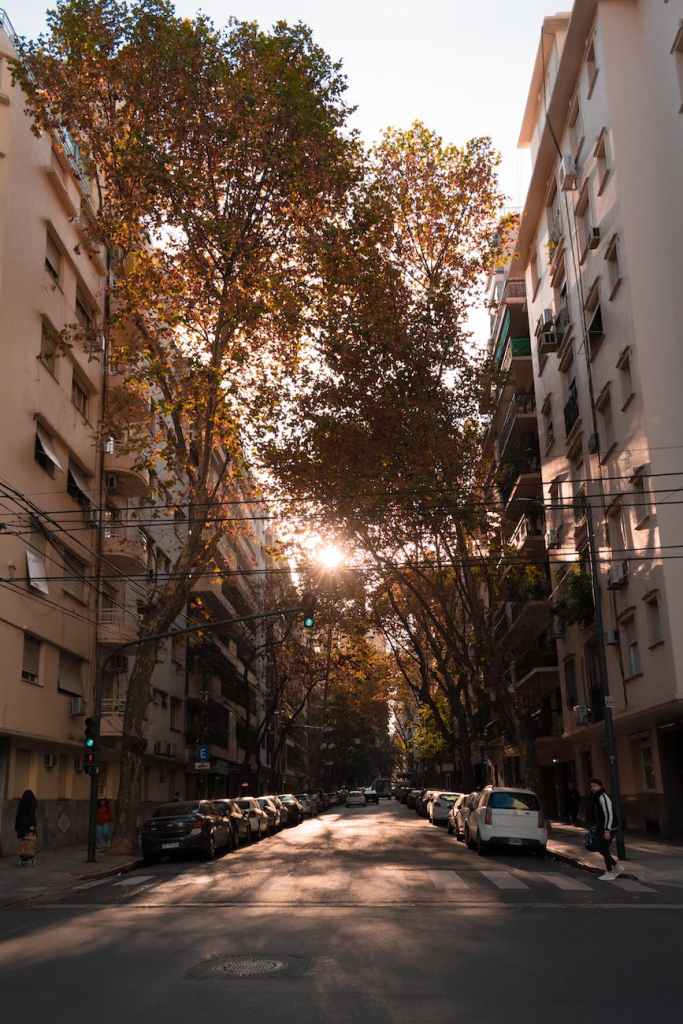
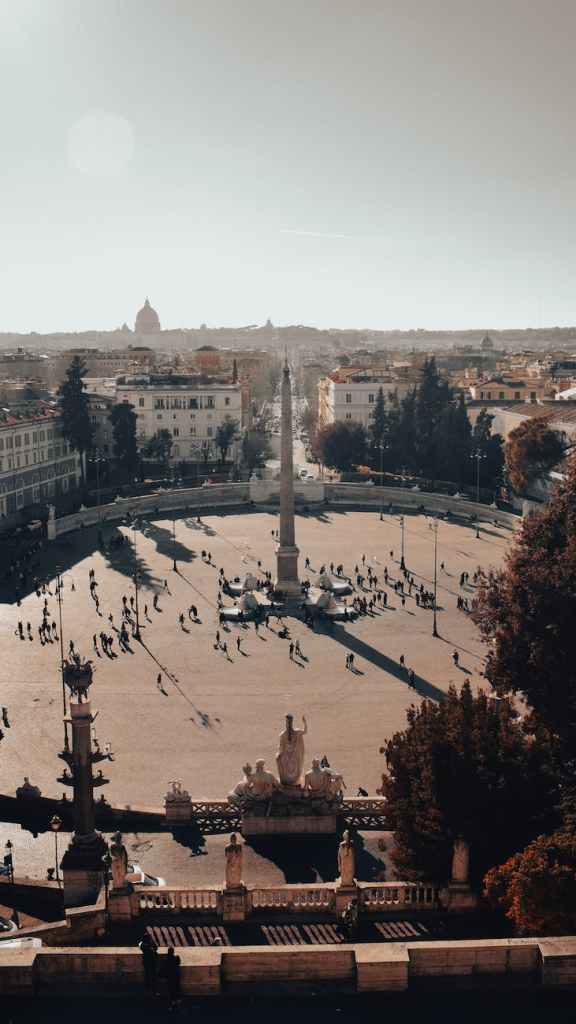
The picture of us with Julie’s host family on Christmas Eve is the only photo I can find from this trip. I have checked my computer, the various cloud locations where I have stored photos, various backups- nada (which may indeed be Spanish). I have folders with pictures from trips years before and after this one but can find none of this trip. Maybe whatever photographic devise I used was lost on the TFH or I deleted them all, no telling. I used publicly available photos that looked familiar.
 Explorer Barb